Margaret logs into the patient portal from her kitchen table. The report is already there, dense, clinical, final. Years ago, she would have waited for a call. Now she reads it herself, line by line, trying to make sense of a language that was never meant for her.
Across the city, Liam refreshes the same portal on his phone. He isn't reading yet. He's waiting for the upload. Same scan. Same system. Two entirely different experiences. And in both cases, nobody from radiology has said a word.
"It's about interpreting people"
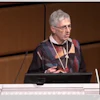
 "Images make diagnosis possible, but communication makes them meaningful," said Dr. Ioana Andreea Gheonea, MD. Courtesy of Claudia Tschabuschnig
Most patients never finish their first sentence. Clinicians interrupt them, on average, within 23 seconds, according to data cited by Dr. Ioana Andreea Gheonea, MD, of the University of Medicine and Pharmacy in Craiova, Romania. If a patient cannot fully describe their concern at the outset, everything that follows the imaging, the interpretation, the outcome, unfolds on incomplete ground.
Caroline Justich, patient advocate and breast cancer survivor from Vienna, Austria, put it plainly: Margaret, 72, grew up in a one-directional system. The doctor explained; the patient listened. Access has now expanded faster than understanding.
David, 52, arrives having already compared providers online and researched his calcium score. He wants probabilities, not reassurance. A 10-year risk figure, a lifestyle plan, a clinical partner. Sophia, 34, tracks her biometrics and won't separate the scan from her daily health decisions, she asks how to reverse a fatty liver finding before she's even left the building. Liam, 24, just wants the upload faster.
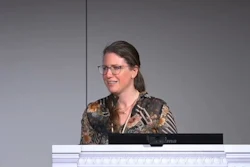
"Radiology is no longer just interpreting scans," Justich said. "It's about interpreting people."
The problem is structural, not individual. Patient portals now deliver results in real time, often before a referring clinician has reviewed them, often before anyone has thought to pick up the phone. In Austria, Justich noted, some patients who complete breast screening never arrive at a breast care center, not because findings are missed, but because the next step is never communicated. They do not exit the system with a pathway. They simply disappear from it.
The invisible radiologist
Only around one in five patients can accurately describe what a radiologist does, according to data cited by Mihai-Alexandru Ene, MD, a radiology resident from the University of Medicine and Pharmacy in Craiova, Romania. Many do not recognize radiologists as physicians at all. Studies suggest that as many as 84% of patients want to meet their radiologist. The encounter, mostly, does not happen.
Three-quarters of radiology residents report at least one communication failure affecting their clinical work. Nearly half describe the experience as tense. There is no shortage of motivation, there is a near-total absence of formal training.
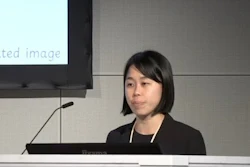
 "Earn trust early, and spend it when you have to," said Mihai-Alexandru Ene, MD.Courtesy of Claudia Tschabuschnig
Ene's proposal was not a structural reform. It was two to five minutes before the scan: enough to establish presence, ask why the patient is there, understand what they've been experiencing, and build the foundation for harder conversations later. The cost is minutes. The return is a patient who knows who you are, and who, when something goes wrong, knows there is someone to call.
"If the moment you have to explain an error is the same moment you two first met," he said, "what you need is not communication lectures, but luck."
Who bears the cost
Steve Ebdon-Jackson, of Royal Berkshire Hospital NHS Foundation Trust in Reading, U.K., was direct about who absorbs the consequences of that gap. Older patients process information more slowly. Working memory changes with age. A positivity bias filters out uncertainty and risk, making difficult findings harder to land accurately. And older patients are, counterintuitively, less likely to challenge what they are told.
 "Older patients either feel, or are made to feel, that they have less possibility to challenge even when the impact on them may be greater," Steve Ebdon-Jackson, a regulatory consultant from Reading, U.K.Courtesy of Claudia Tschabuschnig
"Older patients either feel, or are made to feel, that they have less possibility to challenge," he said, "even when the impact on them may be greater."
Those most vulnerable to misunderstanding are the least likely to question it. That asymmetry doesn't appear in a performance metric. It shows up later, in delayed treatment, unaddressed anxiety, and errors that were accepted rather than caught.
Claiming the clinical role
Prof. Adrian Brady, of University College Cork in Cork, Ireland, challenged the word "paraclinical" directly. In Ireland, trainees spend years in direct patient care before specializing in radiology. In many other European systems, that step has been eliminated -- cut for efficiency, with costs that are now legible in how the specialty understands its own purpose. The radiologist who has never stood at a bedside communicates differently from one who has.
"Be assertive about your right to be considered a clinical partner," Brady told the room. "If we don't do that, our position will continue to be eroded."
Research from the University of Zurich has found that patients who interact directly with their radiologist experience less anxiety and are more likely to recall information accurately. The relationship, when it exists, works. The question is whether the specialty is willing to claim it or whether it will continue to define itself by the report rather than the person who receives it.
Margaret reads slowly, filling gaps with assumption. Liam refreshes his screen. The report is the same. What it means, and how it lands, is not.