Celebrating its 20th anniversary this year, the European Institute for Biomedical Imaging Research (EIBIR) continues to coordinate and secure funding for EU research projects in biomedical imaging technologies. But what does the future hold for this veteran institute over the next two decades?
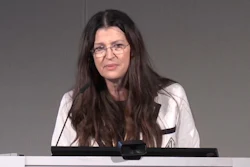
 Prof. Regina Beets-Tan, PhDESR
In an ECR interview during the congress last month, EIBIR’s scientific director Prof. Regina Beets-Tan, PhD, from Maastricht noted how the Institute would support initiatives in the field of biomedical imaging research, while working towards the goal of building more resilient health systems. She highlighted key advances since EIBIR’s inception, and pointed to new imaging research projects on the horizon, as well as the Institute’s new strategic research agenda.
Looking back at 20 years of EIBIR’s journey, she noted that the most transformative element for biomedical imaging research lay in the people behind the projects, rather than in "turning points".
“EIBIR brings together European researchers and helps them navigate the complex landscape of research. EIBIR had secured a lot of funding for projects and that’s important, but the most transformative [aspect] is that we have shifted from fragmented imaging research in nations and institutions to one European imaging research ecosystem,” she noted. “We have been able to create a community of imaging researchers across borders and disciplines in Europe and also create a spirit of collaboration.”
New opportunities
Prevention and digitalization are the key areas for research opportunity particularly in terms of securing funding in the coming years, noted Beets-Tan. She underlined how the European Commission recognizes imaging’s key role as the specialty driving digitalization and provides funding programs in digital transformation from innovation to implementation in healthcare.
The second opportunity for research lies in screening:
“Imaging has less impact if it is only applied to patients once they are diagnosed," she said. "We need to identify high-risk patients before they even get cancer. The field of screening presents the biggest gain for the European Commission to tackle cancer and improve survival so this is the second funding opportunity, and aligned with EIBIR’s new strategic research agenda."
Strategic priorities
EIBIR’s strategic research agenda is currently being finalized but it will have a heavy focus on multidisciplinary research, which has always been at the heart of EIBIR strategy, as well as programs, partnerships, and joint initiatives that straddle scientific and clinical domains and the public and private sectors.
“Imaging research can’t be performed in isolation. To understand the impact of imaging on the patient and outcome, you need to include the entire diagnostic–treatment pathway,” she said.
Flagship initiatives
During the interview Beets-Tan pointed to EIBIR-supported projects currently under the umbrella of the European Commission. One of the most ambitious, the European Cancer Imaging Initiative, aims to build a federated cancer imaging infrastructure accessible to all stakeholders with a dual goal of bolstering the development of AI.
Another EIBIR project, a part of Commission’s Apply AI strategy, aims to bring multidisciplinary expertise together to consider how to move from AI research to implementation in healthcare. Meanwhile, the Commission’s Beating Cancer plan involves EIBIR research focused on lung cancer screening in high-risk populations, with an aim to improve and individualize screening in member states.
Future goals
EIBIR has given imaging research a voice in the European landscape but this influence needs to be continued and strengthened, particularly in the European Research and Policy Agenda, Beets-Tan noted.
Besides maintaining its multidisciplinary focus as a priority, the Institute is also making research accessible for the younger generation through the provision of seed grants to support younger radiologists hoping to work on projects in collaboration with the ESR. In addition, young researchers who want to present their posters at ECR can do so at the EIBIR booth, which looks set to remain a platform for the next generation in future congresses.
And how does EIBIR want to define itself over the next 20 years?
“[It would be] 'Impact through collaboration',” Beets-Tan said. “The next research area is about collaborative research. Only if we collaborate can we turn imaging research into impact for patients and society,” she said.