As radiology moves forward, rapidly driven by AI and technological evolution, so too must the role and skills of the radiographer, noted experts at ECR in March. Presenting their views at the radiographer session "Interventional imaging: technological progress and new frontiers," speakers revealed exciting new horizons in radiography that necessitate enhanced knowledge in the field.
Importantly, radiographer involvement in new interventional mammography technologies such as digital breast tomosynthesis (DBT) and contrast-enhanced mammography (CEM) as well as radiographer-led techniques in biopsy and localization, could impact patient management and outcomes, according to Noelle Clerkin, a radiography advanced practitioner and breast service manager for the Belfast Health and Social Care Trust, U.K.
 Noelle Clerkin
“Embrace DBT and CEM to better select and target lesions, support and consider advanced practice radiographer roles in intervention, and finally, use joint audit, multidisciplinary team (MDT) feedback, and shared protocols to enhance outcomes, safety, and patient comfort,” she told delegates at the session.
She underlined how DBT and CEM have become commonplace over the past ten years: DBT reduces tissue overlap in the breast parenchyma, improves visualization of subtle calcifications and distortion, and helps target nonpalpable lesions.
“[DBT] increases reader confidence and reduces need for extra views, streamlining pathway to biopsy or discharge,” she said. “Meanwhile CEM, often referred to as the ‘poor man’s MRI’, offers higher diagnostic accuracy than standard 2D mammography or DBT, which is particularly useful in dense breast tissue.”
Advanced practice
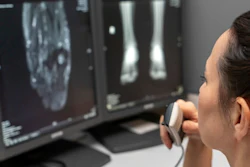
For interventional procedures to be successful, collaborative teamwork is key between the roles of the radiographer, who is involved in patient preparation, setting up equipment and acquiring images, and of the radiologist who focuses on lesion selection, access route, and real-time decision making, Clerkin noted.
“Effective communication pre-, during, and post-procedure, supported by digital tools for rapid communication about cases, technical issues and protocol optimization, is essential,” she added.
Since 1995, U.K. radiography has promoted advanced practice roles for radiographers with appropriate postgraduate education and frameworks that emphasize advanced and consultant radiographer contribution to clinical evaluation and protocol-driven collaboration with radiologists.
As a case in point, independent and autonomous radiographer-performed stereotactic needle core biopsy has proven safe and acceptable and helped to improve workflow and patient experience when supported by structured training and governance, Clerkin noted.
She also pointed to how radiographers’ role in localization using DBT could shorten procedure time and reduce repositioning, improving technical success, and reducing repeat procedures.
However, with new techniques and strategies comes the need for quality assurance (QA) for consistent and safe practice, she noted.
QA is not only important for equipment but also for imaging, she continued: Audits of recall rates, technical repeat rates and biopsy underestimation are vital, as is a joint review of outcomes by radiographers and radiologists to refine techniques and improve cancer detection rates.
Patient-centered care
Clerkin flagged how patients lay at the heart of practice.
“We need to acknowledge the importance of keeping the patient our focus,” she said. “Clear explanations, continuous communication, remaining with the patient, and careful management of positioning and compression during breast intervention is essential no matter what type of intervention or innovation you are using. These responsibilities largely remain with the radiographer and can strongly influence a patient’s anxiety experience, reduce pain, and optimize satisfaction of the procedure as a whole.”
Echoing the need for using new techniques to improve patient care, Irene Nieri, a radiographer from Gustave Roussy Institute in Villejuif, France, pointed to the vital role of the radiographer in both interventional cardiology and vascular interventional radiology which are leveraging fusion imaging and AI to improve the accuracy and safety of the interventional procedure.
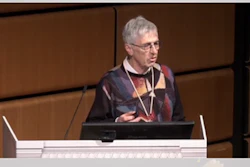
 Irene Nieri
“Fusion imaging is redefining procedural guidance and AI is no longer a research tool but a clinical reality,” she noted. “We are now witnessing the convergence of precision medicine, digital technology, and minimally invasive interventions, a new era in which the catheterization laboratory becomes not only a place of treatment but of intelligent data-driven and image-guided decision making.”
National differences
But how can radiographers obtain dedicated education at advanced levels in interventional cardiology? Answering this question during the discussion section, Nieri noted that while interventional cardiology was covered during studies, in Italy -- Nieri’s country of birth -- and France, radiographers were not always prominent on the teams.
“We should implement the presence of radiographers,” she said. “We have navigation systems and drugs training already but there is a gap between our knowledge and the possibilities that we have in our work environment. This is why these conferences are important to compare different realities in different countries.”
In a different question from the floor about the most promising procedures in interventional nuclear medicine, Slovenia fell under the spotlight as Jelena Perić, a nuclear medicine radiographer from Ljubljana raised the issue of equal access.
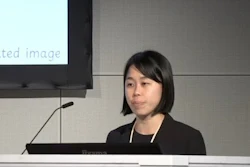
 Jelena Perić
“Definitely theranostic procedures [are the most developing techniques] but we have to receive radiopharmaceuticals from Austria and Italy,” Perić said. “For better theranostics and radionuclides we need to produce our own radiopharmaceuticals. Maybe this will be possible in five to ten years, as and when Slovenia builds its own cyclotron.”
The ECR 2026 session can be found here.