Dear AuntMinnieEurope Member,
It's probably fair to say the jury's still out on PET/MRI. There is a growing consensus that the future of oncologic imaging will include both PET/MRI and PET/CT, and the choice of technique will depend on the case in question.
But introducing new modalities for cancer staging is a tough proposition when existing methods are already accurate, and more widespread use of PET/MRI is likely to need new trial designs to confirm its clinical value, as well as new PET tracers and applications.
Given this background, the early experiences of PET/MRI are attracting interest. New research from Germany involving simultaneous PET/MRI in the human brain in 50 patients is worth a close look. Read more in our Molecular Imaging Digital Community, or by clicking here.
In advance of ECR 2012, the European Society of Radiology (ESR) has revised its training charter. The ESR aims to ensure a single educational voice for European radiology, and the charter is an integral part of its master plan. Get the story here.
Radiology in Turkey is progressing rapidly. At the Abant Izzet Baysal University, located in the western Black Sea region, radiologists are conducting an ongoing study into tularemia, and they are keen to raise awareness of this infection. Visit our MRI Digital Community, or click here.
Meanwhile, U.K. researchers have validated and improved a technique that automatically registers prone and supine images on CT colonography, and they think the new algorithm could save reading time and reduce errors. Click here for the details.
The prevalence of extracardiac findings has been investigated extensively using CT, but less so with MRI. Now Swiss radiologists have found that cardiac MRI can detect significant numbers of extracardiac findings in patients with suspected heart disease, and as many as 20% of them may be serious. Read more here.
Our Case of the Week comes from Finland and features a fascinating report about two patients with mild cognitive impairment. To view it, click here and log in if necessary.

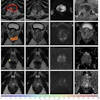


![Overview of the study design. (A) The fully automated deep learning framework was developed to estimate body composition (BC) (defined as subcutaneous adipose tissue [SAT] in liters; visceral adipose tissue [VAT] in liters; skeletal muscle [SM] in liters; SM fat fraction [SMFF] as a percentage; and intramuscular adipose tissue [IMAT] in deciliters) from MRI. The fully automated framework comprised one model (model 1) to quantify different BC measures (SAT, VAT, SM, SMFF, and IMAT) as three-dimensional (3D) measures from whole-body MRI scans. The second model (model 2) was trained to identify standardized anatomic landmarks along the craniocaudal body axis (z coordinate field), which allowed for subdividing the whole-body measures into different subregions typically examined on clinical routine MRI scans (chest, abdomen, and pelvis). (B) BC was quantified from whole-body MRI in over 66,000 individuals from two large population-based cohort studies, the UK Biobank (UKB) (36,317 individuals) and the German National Cohort (NAKO) (30,291 individuals). Bar graphs show age distribution by sex and cohort. BMI = body mass index. (C) After the performance assessment of the fully automated framework, the change in BC measures, distributions, and profiles across age decades were investigated. Age-, sex-, and height-adjusted body composition reference curves were calculated and made publicly available in a web-based z-score calculator (https://circ-ml.github.io).](https://img.auntminnieeurope.com/mindful/smg/workspaces/default/uploads/2026/05/body-comp.XgAjTfPj1W.jpg?auto=format%2Ccompress&fit=crop&h=100&q=70&w=100)


![Overview of the study design. (A) The fully automated deep learning framework was developed to estimate body composition (BC) (defined as subcutaneous adipose tissue [SAT] in liters; visceral adipose tissue [VAT] in liters; skeletal muscle [SM] in liters; SM fat fraction [SMFF] as a percentage; and intramuscular adipose tissue [IMAT] in deciliters) from MRI. The fully automated framework comprised one model (model 1) to quantify different BC measures (SAT, VAT, SM, SMFF, and IMAT) as three-dimensional (3D) measures from whole-body MRI scans. The second model (model 2) was trained to identify standardized anatomic landmarks along the craniocaudal body axis (z coordinate field), which allowed for subdividing the whole-body measures into different subregions typically examined on clinical routine MRI scans (chest, abdomen, and pelvis). (B) BC was quantified from whole-body MRI in over 66,000 individuals from two large population-based cohort studies, the UK Biobank (UKB) (36,317 individuals) and the German National Cohort (NAKO) (30,291 individuals). Bar graphs show age distribution by sex and cohort. BMI = body mass index. (C) After the performance assessment of the fully automated framework, the change in BC measures, distributions, and profiles across age decades were investigated. Age-, sex-, and height-adjusted body composition reference curves were calculated and made publicly available in a web-based z-score calculator (https://circ-ml.github.io).](https://img.auntminnieeurope.com/mindful/smg/workspaces/default/uploads/2026/05/body-comp.XgAjTfPj1W.jpg?auto=format%2Ccompress&fit=crop&h=112&q=70&w=112)