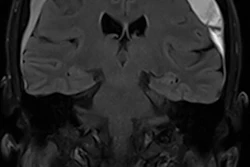
Image-guided transperineal focal laser ablation (TPLA) showed promise in treating prostate cancer in a study published June 2 in Radiology.
At one year of follow-up, MRI-directed, ultrasound-guided TPLA led to an in-field recurrence of clinically significant disease rate of 17%, wrote a team led by Kathelijne de Bie, MD, from Amsterdam University Medical Center in the Netherlands.
“These findings, including the effectiveness of retreatment, suggest that TPLA remains a valuable option for delaying or avoiding radical treatment,” the de Bie team wrote.
Researchers continue to explore the effectiveness of focal therapies for localized prostate cancer tumors. However, de Bie and colleagues noted a lack of data on oncological outcomes of ultrasound-guided TPLA.
Focal therapy is currently not recommended as a standard treatment for localized low- to intermediate-risk prostate cancer. Previous studies suggest that focal laser ablation is effective in inducing irreversible thermal destruction of malignant tissue by using laser energy, which can be guided by imaging.
The investigators studied 12-month oncological outcomes from MRI-directed, ultrasound-guided TPLA in patients with localized prostate cancer. Retrospective data included 195 men with a median age of 69 years who underwent TPLA for 206 lesions between 2018 and 2023 at four centers in the U.S. and Europe.
Of the total lesions, 32% were Gleason score 3+3, 48% were Gleason score 3+4, 29% were Gleason score 4+3, and 7% were Gleason score 4+4.
They reported the following findings:
The median initial prostate-specific antigen (PSA) level was 6.8 ng/mL, while the median tumor length was 11 mm.
In-field recurrence of clinically significant prostate cancer occurred in 36 lesions (17%), with an overall in-field recurrence rate of 49 lesions (24%).
An initial PSA density greater than 0.16 ng/mL2 was an independent preoperative predictor of in-field recurrence of clinically significant cancer (odds ratio [OR], 2.62; p = .05).
Postoperatively, positive MRI findings were predictive of in-field recurrence of clinically significant prostate cancer (OR, 67.9; p < .001), with 83% sensitivity and 89% specificity.
The study authors also highlighted minimal inter-center variability in MRI assessment, writing that this shows how MRI is reliable in follow-up imaging.
 Preablation, postablation, and recurrence multiparametric MRI scans depict a 63-year-old man treated with transperineal focal laser ablation (TPLA) for localized prostate cancer. Clinical parameters included an initial prostate-specific antigen (PSA) level of 7.2 ng/mL, a Prostate Imaging Reporting and Data System (PI-RADS) grade 4 lesion (red circles) in the right apical peripheral zone, and a maximum tumor length of 5 mm. MRI-guided targeted biopsy confirmed a Gleason score 3+4 prostate cancer tumor. (A) Pre-ablation axial T2-weighted MRI scan and apparent diffusion coefficient (ADC) image shows the apical PI-RADS 4 lesion (circles). (B) Six-month post-ablation axial T2-weighted MRI scan and ADC image show cystic necrosis (arrows). There was no evidence of recurrence; the PSA level was 1.5 ng/mL. (C) One-year after ablation, the patient’s PSA level had increased to 4.3 ng/mL. Axial T2-weighted MRI scan and the ADC image shows a recurrent lesion (blue circles) in the right apical peripheral zone adjacent to the ablation scar. Targeted biopsy confirmed Gleason score 3+4 prostate cancer, which was classified as in-field recurrence of clinically significant prostate cancer and subsequently re-treated with TPLA. In summary, serial multiplanar MRI demonstrates treatment response after TPLA with post-ablation necrosis, followed by MRI-detected IFR confirmed with biopsy at 12-month follow-up. Multiparametric MRI was performed with a 3.0-T MRI scanner (Skyra; Siemens Healthineers) using T2-weighted, diffusion-weighted, and ADC sequences, with gadobenate dimeglumine contrast material administration (Bracco Diagnostics).RSNA
“These findings support routine PSA testing every 6 months and MRI at one year or if clinically indicated,” they wrote. “A risk-adapted biopsy approach with timely retreatment is recommended when recurrence is suspected.”
The authors also called for standardized treatment and follow-up protocols to confirm their findings, reassess recurrence predictors, and confirm longer-term oncological outcomes.
Read the full study here.