When Saif Afat got the call from ECR congress president Prof. Dr. Minerva Becker asking whether he wanted to moderate a session on Ötzi, pharaohs and ancient medicine, he did not need much convincing. “All in,” he said.
Two months later, Prof. Dr. Afat, a radiologist at the University of Tubingen and congress president of RÖKO 2026, brings the same instinct to Leipzig. "Radiology without borders" opens 13 May at the Congress Center Leipzig, the 107th German Radiology Congress, run by the youngest presidency in its history.
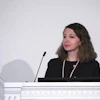
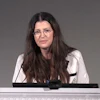
 "I've never seen an open forum that full before," said Prof. Dr. Saif Afat, of the University of Tubingen in Tubingen, Germany, pictured with co-moderator Virginie Magnin, of Lausanne University Hospital in Lausanne, Switzerland. Courtesy of Claudia Tschabuschnig
"If you come to Leipzig, you will have fun, you will network, you will learn, you will see new things," he said in a video interview at ECR.
The ECR session turned out to be one of the more unusual draws at the congress while following the question: what can radiology still tell us about people who died thousands of years ago?
At the center of the session were two speakers approaching the ancient world from different angles: Prof. Dr. Dr. med. Frank Rühli, director of the Institute of Evolutionary Medicine at the University of Zurich, and Emad S. Naguib, MD, MBA, of Alsalam Hospital in Cairo, who spoke about the medical traditions of ancient Egypt.
What CT can still see in a pharaoh
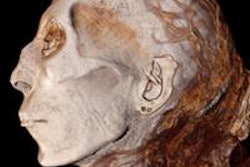
Paleoradiology has a long history of its own. Within months of Wilhelm Conrad Röntgen’s discovery of x-rays, researchers had already imaged an Egyptian mummy. CT followed much later, and MRI later still. But for Rühli, CT remains the key tool.
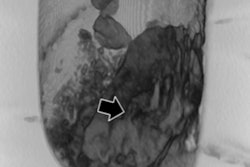
A scan may show degenerative changes in the spine, and, right beside them, a heart scarab placed in the chest after the heart had been removed. In another case, imaging helped identify a coin that matched the mummy’s carbon dating. In canopic jars believed to contain complete organs, scans showed only small tissue fragments.
Tutankhamun remains one of the most overinterpreted bodies in history. Rühli noted, with some skepticism, how many diagnoses have been assigned to the young king over the years, including claims that make little sense given the condition of the mummy itself.
What the CT actually shows, he said, is a 19-year-old in poor condition, heavily altered by embalming and later damage. The body was cut in several places in the 1920s by excavators trying to retrieve jewelry. One injury still raises questions: an open fracture at the left knee.
“I’m always very careful about the framing,” Rühli said, “because you never know what happened 3,500 years ago.” Radiology can narrow the possibilities, but it cannot fully reconstruct the past.
Ötzi and the limits of certainty
If Tutankhamun remains famous, Ötzi may be even more scrutinized. Found frozen in the Alps, the Neolithic Iceman has become one of the most intensively studied human remains in existence.
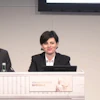
 "We are all here because we are at the end of the line of survivors and of people who contributed to this knowledge," said Prof. Dr. Frank Rühli.Courtesy of Claudia Tschabuschnig
Rühli’s group helped establish the likely fatal injury: an arrowhead lodged in the body that damaged the subclavian artery, causing severe bleeding. Ötzi died in his mid-40s and also showed pronounced dental wear. His brain is still preserved, though shrunken, and appears patchy on imaging, something Rühli said deserves more study.
But the broader point for him was the recurring presence of diseases often treated as modern. Cardiovascular disease, including atherosclerosis, appears again and again in ancient remains across different cultures and time periods.
“We always think we are disconnected to the past,” he said. “But from a medical disease perspective, the roots are similar.”
The curse of the pharaohs
The inevitable question from the audience: what about the curse? The deaths associated with the opening of Tutankhamun’s tomb in 1922 still have cultural staying power. Rühli pointed to a British Medical Journal paper that examined survival among those involved in the excavation. It found no evidence that taking part shortened lives.
Rühli’s real concern was not supernatural punishment, but rather exposure. He pointed to fungal risk in tomb environments and said protective equipment matters, especially when opening enclosed spaces. He was even more cautious about humid European sarcophagi than dry Egyptian tombs.
“You may actually have some anaerobic pathogens in there,” he said. “I would always work with protective masks when you open a tomb.”
Ancient medicine, beyond the cliché
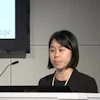
 "For every malady, there is a cure," says Emad S. Naguib, MD, MBA, of Alsalam Hospital in Cairo.Courtesy of Claudia Tschabuschnig
He spoke about the “houses of life,” early centers of learning associated with temple and court culture, and about the hierarchy of physicians in ancient Egypt. There were specialists, overseers and chief physicians. He also pointed to Imhotep, the polymath later revered and eventually deified as a god of medicine.
Ancient Egyptian medical texts still shape how that history is told. Naguib highlighted the Edwin Smith Papyrus, known for its detailed observations on trauma and anatomy, including cranial sutures, the meninges and cerebrospinal fluid. He also cited the Ebers Papyrus, a long medical scroll from around 1550 BC containing hundreds of remedies, and the Kahun Papyrus, widely regarded as the earliest known gynecological text.
Night blindness treated with roasted ox liver. Cataracts treated with honey-based mixtures. Urethral strictures treated with grease. A leather prosthetic toe designed not just for appearance, but to help an amputee walk.
Mummies as part of one’s own heritage
On another note an Egyptian radiologist in the audience spoke about what it means to look at mummies not only as scientific material, but as part of one’s own heritage.
“Radiology does not only unlock the secrets for our patients, but also our own heritage,” he said. “There is a lot of information we get from our mummies that we would have never known if we wouldn’t be able to look inside.”
He went on to connect that work to a longer chain of medical history, the idea that today’s doctors stand on the accumulated efforts of earlier civilizations.
Rühli agreed. “We are all here because we are at the end of the line of survivors and of people who contributed to this knowledge,” he said. “You can’t underestimate the importance of Egyptian medicine towards Greek medicine and towards modern civilizations.”
From Vienna to Leipzig
Afat now carries that same openness into RÖKO 2026, where he serves as congress president alongside PD Dr. Bettina Baeßler and PD Dr. Daniel Pinto dos Santos. The digital program continues through 20 June.