During a special session at ECR 2026, a variety of speakers painted vivid pictures of the challenges to radiology during disaster. One shared a photo of the generator in his own CT room sitting directly on the floor. Another described trying to identify earthquake victims using handwritten notes -- hair color, clothing, eye color -- and a third showed what blast injuries look like on imaging, from blasts to the lung to ruptured globes.
The session, “How to Cope When War or Disaster Hits Your Own Radiology Department,” opened with Yurii Antonenko, MD, of Kyiv City Clinical Hospital No. 6 in Kyiv, Ukraine. He spoke from experience, not theory. We covered his presentation here.
The speakers who followed turned to earthquakes, mass casualty events, flooding, and ransomware. All addressed a central question: what happens when the systems radiology depends on fail at the exact moment demand surges?
Pink pajamas, blue eyes
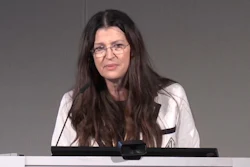
 "Disasters remind us that radiology is not only about imaging. It is about decisions, responsibility, and humanity," said Prof. Nursel Yurttutan, MD, of Kahramanmaras Sutcu Imam University in Kahramanmaras, Turkey.Courtesy of Claudia Tschabuschnig
In February 2023, two earthquakes measuring 7.8 and 7.6 struck Turkey within nine hours, devastating a large part of the country. Prof. Nursel Yurttutan, MD, of Kahramanmaras Sutcu Imam University was working in the city where she was born.
PACS failed. The electronic medical record failed. Many patients arrived without identity documents. Staff improvised with handwritten descriptions: age, clothing, hair color, eye color. One example Yurttutan gave was a small girl in pink pajamas; another was a boy with blue eyes.
More than 300 whole-body CT exams were performed on the first day. Patient volume rose to nearly 10 times the usual level. Radiologists performed FAST examinations on patients lying on blankets in the emergency department. Subspecialization gave way to whatever was needed most urgently.
The ethical problems were immediate too: scanning patients without confirmed identities, triage decisions made under extreme pressure, and incomplete documentation. Yurttutan’s point was blunt: delayed care can be more unethical than imperfect paperwork.
By day four, the strain on staff was becoming visible, especially among younger colleagues. A web-based teleradiology platform was then deployed remotely. More than 300 radiologists joined, and over 20,000 examinations were reported within 48 hours.
Triage is not a one-time event
Elizabeth Dick, MD, of Imperial College London framed her talk around a major-incident simulation: a train explosion, followed by a vehicle attack, with a major incident declared before 9 a.m.
Her point was that triage is not ordinary clinical practice. In a mass-casualty setting, radiology has to support rapid decisions for the whole population of patients, not ideal care for each individual case. If imaging backs up, the rest of the hospital backs up with it. Planning has to extend beyond the first rush and into later shifts as patients continue moving through emergency care, theatre, ICU, and back to imaging.
Her cases showed the range of blast injuries: blast lung on serial chest x-rays, ruptured globe, subarachnoid hemorrhage, pneumoperitoneum, and abdominal injuries caused by metal fragments. One CT scout was packed with nuts and bolts, showing a device designed to maximize secondary injury.
She also stressed that triage has to be repeated. One patient arrived breathless, had a normal initial x-ray, and was placed in a corridor for observation. Two hours later, the patient had developed a pneumothorax. The lesson was simple: patients have to be re-triaged, and radiology is part of that process.
Floor-level generators
Prof. Mehmet Ruhi Onur, MD, of Hacettepe University in Ankara photographed his own department before speaking. In one image, the generator for a CT room sat directly on the floor. In another, console cables had no waterproof protection. In an ultrasound room, cables ran at floor level.
His point was practical: a flood does not have to be dramatic to disable a department. If water reaches the wrong components, imaging equipment can be lost quickly. In MRI, water reaching gradient cabinets can make the system unusable. Electrical shorting can damage gradient amplifiers. Servers, PACS hardware, monitors, and power systems all become vulnerable if they are installed too low.
His recommendations were straightforward: cut power first, restrict access, do not reenergize wet equipment, contact the vendor, and document water level, exposure time, and affected parts. Electrical panels, servers, and PACS hardware should be elevated. Monitors should be wall-mounted above likely flood level. Someone needs to be clearly designated in advance to know how to shut down each system and who to call.
When the network stays up but access disappears
Niall Sheehy, MD, of St. James’s Hospital in Dublin, lead radiologist for Ireland’s National Integrated Medical Imaging System (NIMIS), closed the session with a description of the ransomware attack that hit Ireland’s public health service in 2021.
His opening line was memorable: “Ransomware is nothing. You’ll survive it.”
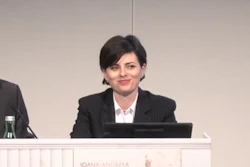
 "We had no plans at all. It never occurred to anyone that it could happen," said Niall Sheehy, MD, of St. James's Hospital in Dublin.Courtesy of Claudia Tschabuschnig
The attack surfaced on 14 May 2021, but the malware had entered the network weeks earlier through a phishing email carrying an Excel file opened on an administrative workstation. NIMIS itself was not compromised, but the network it depended on was cut off. The result was functionally the same: no access to PACS, no orders, no records, no reporting system, no email, no phones.
Departments improvised. Some used film printers until supplies ran out. Some built temporary PACS setups from off-the-shelf computers. Carbon paper returned for duplicate reports. Disaster plans stored on shared drives were inaccessible when they were needed most.
Recovery was slow. Even after systems came back, added security measures disrupted ordinary workflow for months. Productivity dropped to levels Sheehy compared with the second COVID-19 lockdown.
Sheehy's takeaway was not just that systems need backup, but that backup has to be available outside the main network: segmented infrastructure, printed downtime kits, temporary reporting workflows, dark PACS systems, and cloud-based archiving.
When systems fail
Across the session, the pattern was consistent: disaster planning in radiology is not only about the immediate event, but about what happens next -- when identification fails, when documentation becomes partial, when staff are exhausted, when communication breaks down, and when imaging becomes the bottleneck for the whole hospital.
The question was less whether systems will fail than which ones will fail first, and whether the fallback is ready before it is needed.
Our full coverage of ECR 2026 can be found here.