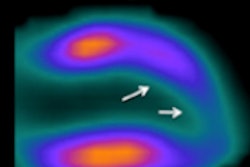

SPECT/CT imaging remains the established clinical standard for detecting transthyretin cardiac amyloidosis, while emerging PET tracers targeting amyloid directly show promise for future routine use but currently remain investigational and limited to clinical studies.
- SPECT/CT is mandatory: Bone-avid tracers like technetium-99m PYP require SPECT or SPECT/CT to distinguish true myocardial uptake from blood-pool activity and adjacent structures.
- Cardiac amyloidosis is more common than previously thought: Recent screening studies found cardiac amyloidosis in approximately 13% of heart failure cohorts and 10% of patients with aortic stenosis.
- Bone tracers are not interchangeable: MDP and HMDP show different uptake patterns for cardiac amyloidosis imaging, requiring careful tracer selection.
- PET tracers target amyloid directly: Emerging fluorine-18 thioflavin derivatives and iodine-124 evuzamitide show greater affinity for amyloid but require different timing protocols and remain investigational.
- Quantification remains unanswered: While PET could eventually provide quantitative amyloid burden measurements, evidence is currently limited and standardized response criteria are not yet established.
SPECT/CT remains the clinical workhorse for noninvasive imaging of transthyretin cardiac amyloidosis, while emerging amyloid-targeting PET tracers could eventually allow more direct imaging of amyloid deposits, experts said during a joint webinar organized by the European Association of Nuclear Medicine (EANM) and the Japanese Society of Nuclear Medicine (JSNM).
The webinar brought together Prof. Takashi Kudo, MD, PhD, of Nagasaki University, Japan, and Prof. Pierre-Yves Marie, MD, PhD, of Université de Lorraine and CHRU Nancy, France.
Cardiac amyloidosis results from extracellular deposits of misfolded proteins within the myocardium. Its two major forms are immunoglobulin light-chain (AL) and transthyretin (ATTR) amyloidosis, which require different treatment pathways.
Kudo recalled learning as a medical student that ATTR cardiac amyloidosis was a rare disease. Today, more patients are being identified, with recent screening studies finding cardiac amyloidosis in about 13% of heart failure cohorts and 10% of patients with aortic stenosis. ATTR accounts for most cases in these settings.
The availability of disease-modifying therapies has made earlier detection increasingly important.
SPECT should not be optional
Bone-avid tracers such as technetium-99m PYP, DPD, and HMDP have enabled noninvasive ATTR diagnosis, but planar scintigraphy alone can make it difficult to distinguish true myocardial uptake from blood-pool activity or adjacent structures.
"We consider SPECT is almost mandatory," Kudo said. He showed cases in which apparently low or uncertain uptake on planar images became clearly myocardial on SPECT or SPECT/CT. Conversely, activity that appears cardiac on planar imaging can lead to false-positive interpretations.
His advice was: "Do SPECT. If you have SPECT/CT, do SPECT/CT."
Kudo also cautioned against forcing every examination into a positive or negative category. A Japanese working group incorporated a "pending," or nondiagnostic, category into its pathway, leaving biopsy as an option when imaging and clinical suspicion do not agree.
"There is no need to insist on the diagnosis only with nuclear medicine," he said.
Not all bone tracers are equal
In Japan, MDP and HMDP may both be used for conventional bone scintigraphy, but Kudo said they should not be regarded as interchangeable for cardiac amyloidosis.
"Not all the bone scan agents are equal for cardiac amyloidosis imaging," he said, presenting a case in which HMDP demonstrated cardiac uptake while MDP did not.
Researchers also still do not know exactly why bone tracers accumulate in ATTR amyloid. "Nobody knows the exact mechanism," Kudo said. That uncertainty has helped drive interest in PET tracers designed to bind amyloid more directly.
PET targets amyloid itself
Marie discussed fluorine-18-labeled thioflavin derivatives, including florbetaben, florbetapir, and flutemetamol, as well as iodine-124 evuzamitide.
The thioflavin-derived tracers are already used for cerebral amyloid imaging but are not approved for routine cardiac amyloidosis diagnosis. Evuzamitide remains investigational.
"The tracers derived from thioflavin have greater affinity for AL than for ATTR," Marie said. AL disease generally shows stronger and more sustained uptake, while ATTR uptake can be weaker and transient. Evuzamitide appears to show a different pattern, with particularly strong uptake in ATTR disease.
Timing therefore affects what PET reveals. With thioflavin-derived agents, imaging for ATTR needs to occur early enough to capture transient uptake. Evuzamitide imaging, by contrast, requires a delay of around four to five hours to allow blood-pool activity to clear.
Quantification comes with unanswered questions
PET could eventually provide a quantitative measure of myocardial amyloid burden and help researchers assess changes during treatment. For now, however, the evidence is limited.
"The data are very scarce on this topic," Marie said. Asked which PET response criteria should be used, he replied: "Really, I don't know. Nobody knows."
Amyloid PET is also not ready for routine cardiac use. "We cannot use it in routine, of course," Marie said, noting that current use remains within clinical studies.
For now, SPECT/CT remains established for noninvasive ATTR imaging, while PET is moving toward more direct assessment of amyloid itself.