
Radiation medicine and theranostics may offer solutions to address cancer care inequalities in low-income countries, but success requires not just equipment but also workforce training, infrastructure support, and international cooperation to ensure equitable access to treatment worldwide.
- Over 20% of countries have no access to radiotherapy, with an estimated need for 30,000 linear accelerators by 2045.
- Theranostics capacity remains highly uneven globally, with countries like Germany and Australia well-equipped while parts of Africa, Latin America, and Asia lack centers.
- Workforce training shows measurable impact: 70% of graduates implemented learned techniques within two years.
- Image-guided adaptive brachytherapy for cervical cancer improves cure rates and reduces side effects, with investment returns within five years.
- Successful implementation requires infrastructure beyond equipment, including electricity, training, spare parts and logistics.
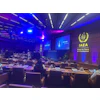
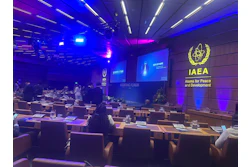
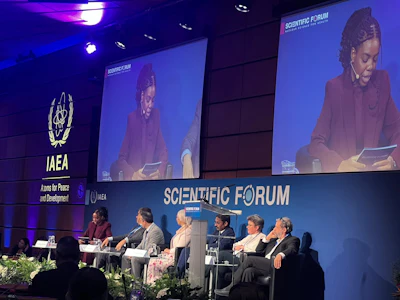
“Imaging is the thread through the entire cancer journey,” Dr. Dina Husseiny Salama, Head of the Radiology and Radiation Protection Department at the Egyptian Atomic Energy Authority, Egypt, said at the IAEA Scientific Forum in Vienna, where radiology was seen as a determining factor throughout the entire cancer pathway.
“It helps us to detect early, to diagnose accurately, to stage precisely, to guide treatment, assess response and monitor survivors and palliative cases,” she specified. Taking this one step further, she observed: “We are moving from access to precision,” while stressing the importance of patient trust, justification and shared decision-making at every step.
 Dr. Dina Husseiny Salama, Head of the Radiology and Radiation Protection Department at the Egyptian Atomic Energy Authority, Egypt.IAEA Scientific Forum
“If you can see it, you can treat it”
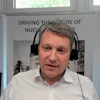
“Theranostics is the new frontier of hope,” Dr. Claudio Tinoco Mesquita, Head of the Nuclear Medicine Section at Hospital Universitário Antônio Pedro, Fluminense Federal University, Brazil, said. “If you can see, you can treat. If you cannot see, you cannot treat.” He pointed to PET/CT as one example of how molecular imaging can alter the entire treatment pathway, including shifting a patient from localized to systemic therapy and avoiding surgery.
 Dr. Claudio Tinoco Mesquita, Head of the Nuclear Medicine Section at Hospital Universitário Antônio Pedro, Fluminense Federal University, Brazil.IAEA Scientific Forum
The scale of the access gap
“More than 20% of countries and territories have no access to radiotherapy even today,” Dr. Umesh Mahantshetty, Director of Homi Bhabha Cancer Hospital, Tata Memorial Center, India, said, highlighting the scale of the access gap.
“We need at least 30,000 linear accelerators by 2045,” he said, putting the need into concrete numbers. He also pointed to the potential return from investing in image-guided adaptive brachytherapy for cervical cancer: “If all women with cervical cancer are treated with image-guided adaptive brachytherapy, we cure more patients and the side effects are less.”
“In that model, we showed that within five years we get back what we invest.” He added that “in the last seven years, we have trained 130 institutions to implement image-guided adaptive brachytherapy.”
Training the workforce
Another gap lies in staff training. Across Latin America, significant disparities remain in oncology development and radiotherapy technology, said Dr. Ariel Fariña Barrios, Director of the Master’s Program in Advanced Radiation Therapy for Latin America and the Caribbean at the Arturo López Pérez Foundation, Chile.
He pointed to measurable uptake after training: “Two years after graduation, around 70% had implemented the techniques they learned. Eighty-two percent reported that the program had made a major impact on their professional development.”
“Equipment is not enough”
 Dr. Alejandro Mazal, Head of Medical Physics Service and Technical Director at the Protontherapy Centre Quironsalud in Madrid, Spain.IAEA Scientific Forum
“Equipment is not enough.” Successful implementation, he stressed, depends on the surrounding infrastructure and workforce: “If we want to install something, we need the whole environment: electricity, training, spare parts and logistics for patients and their families.” Communication was another priority: “The first should be communication and education.”
Body composition, another factor influencing cancer risk and treatment outcomes, was addressed by Dr. Ellen Kampman, Professor and Chair of Nutrition and Disease at Wageningen University in the Netherlands.
“Body composition assessment needs to be part of comprehensive cancer care,” she said, while calling for more research in low- and middle-income settings. “We need large studies in Africa.” She noted that “in Africa, we see that women with breast cancer are diagnosed at an early age, often with high-grade disease and triple-negative tumors.”
Against this wider backdrop of access and capacity, Mahantshetty estimated the scale of future demand: “Every year roughly 12 million patients would require radiotherapy.”