
Theranostics must advance into earlier cancer treatment stages and expand beyond prostate cancer to diseases like breast, lung, and colorectal cancers, while addressing long-term toxicity concerns through personalized approaches and robust clinical evidence.
- Earlier treatment lines: Recent evidence supports moving established PSMA-targeted radioligand therapies into earlier stages of cancer treatment rather than only late-stage disease.
- Expand beyond prostate cancer: Theranostics currently focuses narrowly on prostate cancer and neuroendocrine tumors; expansion to breast, lung, and colorectal cancers is essential for broader impact.
- Personalized approach needed: Treatment requires moving beyond one-size-fits-all protocols to use biomarkers, combination therapies, and new targets tailored to individual patients.
- Long-term safety critical: As radioligand therapy moves earlier, monitoring long-term toxicity becomes increasingly important, requiring transparent risk-benefit discussions based on patient circumstances.
- Robust evidence required: Translating research to clinical practice demands solid datasets and convincing evidence from large patient populations, not just preliminary results from small studies.
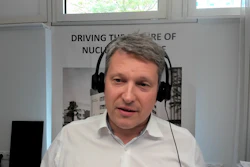
Prof. Ken Herrmann is director of the Department of Nuclear Medicine at University Hospital Essen and incoming editor-in-chief of The Journal of Nuclear Medicine. He spoke with AuntMinnieEurope about the developments shaping theranostics and the work still required to make it a central component of cancer care. video interview Ken Herrmann, riverside
Also watch this video interview, where Herrmann talks earlier PSMA-targeted therapy, total-body PET, low-dose cancer screening, his plans for The Journal of Nuclear Medicine, and the ambitions behind Essen’s new Theranostics Center of Excellence.
AuntMinnieEurope: What are the most important developments in theranostics right now?
Ken Herrmann: One major development is moving established radioligand therapies into earlier treatment lines. Recent evidence on PSMA-targeted therapy represents a significant change for the field.
The second priority is expanding theranostics beyond its established indications. Prostate cancer and neuroendocrine tumors are important, but we also need effective approaches for diseases such as breast, lung, and colorectal cancer. Otherwise, the field will remain too narrowly focused to achieve its full potential.
We also still know relatively little about how best to use the therapies we already have. Treatment often follows a one-size-fits-all approach. We need to investigate how it can be adapted through biomarkers, combination treatments, new targets, different binding strategies, and other innovations.
AME: Where are the greatest obstacles to translating research into clinical care?
Herrmann: Trying something new in the laboratory is one thing. Treating large numbers of patients is another, and that process takes time.
We need brilliant researchers at the beginning of the innovation pathway, but we also need people working at the interface between research and clinical practice. It is not enough to treat three patients and report an interesting result. We must build solid datasets and generate convincing evidence.
That can be frustrating because intellectually we are often already thinking about the next development. Nevertheless, without robust evidence, these therapies will not gain broader clinical acceptance or be scaled successfully.
AME: Are young doctors and researchers increasingly interested in nuclear medicine?
Herrmann: The situation has probably never been better. We are receiving strong applications and can be selective about who joins our department. In the past, workforce planning caused us sleepless nights; that situation has changed.
Several factors have contributed to this, including the growth of the entire field. It could become a kind of “perfect storm” in a positive sense. But we must not become complacent. People can become satisfied very quickly, while other medical specialties are continuing to advance as well.
Our field depends on attracting enthusiastic young people who contribute energy, ideas, and commitment.
AME: How should the field address concerns about radiation and long-term toxicity?
Herrmann: German-speaking countries tend to be more cautious about radiopharmaceuticals than some other countries. These concerns must be taken seriously.
Combination therapies may have long-term toxicities, and we must be honest about that. Very few effective treatments have no adverse effects. The important thing is to place those risks in a realistic clinical context and discuss them transparently.
The calculation is different for a patient with advanced metastatic disease and a limited life expectancy than for someone who may live another 10 or 15 years. As radioligand therapy moves into earlier treatment settings, long-term safety becomes increasingly important.
AME: Which patients could benefit from receiving radioligand therapy earlier?
Herrmann: New therapies generally begin in late-stage disease, but the aim is to move effective treatments gradually into earlier settings. This must happen in a controlled way, with careful monitoring of long-term toxicity.
We also need to question whether the same treatment schedule, for example, six standardized cycles, is appropriate when therapy is used earlier. The goal is not to insist dogmatically that radioligand therapy must always be used in the first line or in one particular cancer.
We need to identify the clinical sweet spot where patients receive the greatest benefit with an acceptable risk. That requires a great deal of research, and we must accept that some approaches will not work.