
Switzerland is developing new regulatory frameworks for radiopharmaceuticals to accelerate innovation in nuclear medicine, addressing gaps in current drug regulations that don't account for the unique characteristics of molecular imaging agents and enabling faster clinical adoption of promising therapies.
- Ultra-low-dose imaging allows study of younger, healthier patients and enables faster scanning with improved patient comfort while potentially increasing department throughput
- Swiss regulations designed for conventional drugs like antibiotics don't adequately address radiopharmaceutical differences, creating barriers to phase 0 and phase I trials
- Switzerland operates nearly 40 PET centers for 10 million people, with continued investment in total-body PET systems and technological advancement
- Promising imaging biomarkers struggle to reach clinical practice because clinicians need simple, actionable answers about treatment decisions rather than scientifically interesting but unclear clinical benefits
- Policy, regulation, and technology must evolve together to enable faster, lower-cost research with fewer patients while maintaining ethical standards
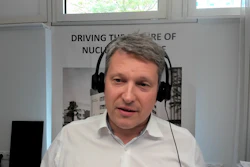
Dr. Antoine Leimgruber, director of development for nuclear medicine at Swiss Medical Network in Genolier, Switzerland, discusses early-phase trials, outpatient therapy, equipment investment, and why promising imaging biomarkers struggle to enter clinical practice.
AuntMinnie Europe: What practical benefits can ultra-low-dose imaging offer?
Dr. Antoine Leimgruber: Lower radiation exposure could allow us to study younger or healthier patients and people with longer life expectancies, rather than concentrating mainly on patients with advanced cancer. It can also support drug development by allowing researchers to image patients over longer periods and observe how a drug is distributed.
There are immediate practical benefits as well. Patients in pain or those unable to remain still can be scanned more quickly. Fast, breath-hold PET imaging could improve patient comfort and workflow while potentially allowing departments to examine more patients each day.
These capabilities are already reaching practice. We perform fast and breath-hold scans and adapt acquisition times for patients in pain. Although the research has longer-term aims, new scanner capabilities can deliver an immediate benefit.
AME: What supports innovation in Switzerland and what holds it back?
Leimgruber: Switzerland’s small scale offers advantages, and there is money in the system, including funding for research. However, we also face regulatory and reimbursement challenges.
Many radiopharmaceuticals can be tested at very low levels during screening and development, when side effects are generally not expected. Yet Swiss regulations, like those in many countries, were largely designed for conventional drugs such as antibiotics or anticancer agents. We do not yet have a framework that fully recognizes the differences between these classes of molecules.
AME: What debates are currently taking place within Swiss nuclear medicine?
Leimgruber: One concerns the changing reimbursement system. Another is how to adopt rules that facilitate phase 0 and phase I trials.
As a small specialty, we must determine how to attract the attention of regulators and politicians. The pharmaceutical industry is more influential than manufacturers, while changing perceptions of nuclear energy are also filtering into nuclear medicine. Everything “nuclear” appears to be viewed more positively than it was 10 or 20 years ago.
Switzerland remains relatively conservative on environmental and radiation protection, partly reflecting the Germanic regulatory tradition. A key debate is whether therapies can be delivered in outpatient rather than inpatient settings, which could help unlock nuclear medicine’s potential.
AME: How should hospitals assess investments in new equipment?
Leimgruber: Redundancy is crucial for small departments. If one of only a few PET scanners fails, patients cannot easily be redistributed. Depending on the regulatory environment, a center might favor several cheaper machines or fewer systems offering maximum throughput and reliability.
Switzerland has almost 40 PET centers for fewer than 10 million people, with several total-body PET systems installed or being installed. There is a continuing drive to advance technologically.
AME: Why do promising imaging biomarkers fail to reach clinical practice?
Leimgruber: Imaging should reveal biology, not only anatomy. But clinicians ultimately need simple answers for individual patients: treat or do not treat, wait or intervene.
A biomarker is difficult to adopt unless its consequence can be expressed in a few words: the patient will live longer, receive this treatment, or avoid that treatment. Many findings are scientifically interesting, but their benefit can be difficult to prove clearly enough for adoption in clinical practice.
AME: Does this require a change in mindset?
Leimgruber: I don’t know whether mindset is the main problem. Every time we want to answer a question, it takes considerable time and money. Medical imaging can play an important role if it allows us to test more within the same patient population and answer questions faster and at lower cost.
We have a finite number of patients and cannot conduct every study we would like to run. If answering each question requires hundreds of millions and five years, advancing medicine becomes extremely difficult. We therefore need to improve not only technology but also policy and regulation in an ethical way.
AI, new devices, and evolving regulatory frameworks could help us answer better questions with fewer patients. All these elements need to come together.