
The IAEA Scientific Forum highlighted that cancer care access is deeply unequal, with 70% of cancer deaths occurring in low and middle-income countries, while the agency's Rays of Hope initiative works to bridge this gap by establishing treatment centers, training medical staff, and expanding radiotherapy equipment to underserved regions worldwide.
- 70% of cancer deaths in 2024 occurred in low and middle-income countries, despite treatment options existing in wealthier nations.
- The IAEA's Rays of Hope initiative (launched 2022) has trained 800 medical staff, established 20+ Anchor Centres, and procured 150+ major equipment pieces across 100 countries.
- 90% of cancer patients in low-income countries lack access to radiotherapy when needed, highlighting critical treatment gaps.
- Tanzania's expansion model demonstrates progress: radiotherapy sites grew from 3 to 6 (2020-2026), MRI scanners from 7 to 28, and access improved from 14% to 26%.
- IAEA Director General emphasized this is "death by choice," as existing equipment and technologies fail to reach millions who need them.
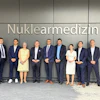
“Cancer care is not a privilege. It is an absolute right.” That set the tone at the opening of the IAEA Scientific Forum in Vienna, an event taking place alongside the agency’s 70th General Conference.
The forum is giving an insight into the IAEA’s activities in the radiation and nuclear field, with various sessions and lectures covering medical imaging, nuclear medicine, radiotherapy, medical physics, training, financing, and especially the stark inequality in access.
The IAEA’s Rays of Hope initiative, launched in 2022, tries to bridge that gap. Around 100 countries have joined the initiative, more than 20 Anchor Centres have been established, around 800 medical staff have been trained, more than 20 new or expanded cancer centers are being planned or built, and over 150 major pieces of equipment have been procured.
“This is death by choice”
 IAEA Director General Rafael Mariano Grossi warned that existing cancer technologies still fail to reach many patients, calling the situation “death by choice.”IAEA Scientific Forum
Around 70% of cancer deaths in 2024 OPEC Fund President Abdulhamid Alkhalifa highlighted that around 70% of cancer deaths occur in low and middle income countries and that an estimated 90% of cancer patients in low income countries lack access to radiotherapy when needed.IAEA Scientific Forum
Ministers paint a stark picture
Ministers and officials from various countries kept painting that dark picture. Burkina Faso’s health minister said nearly one in two cancer patients dies within the first year of diagnosis, pointing to gaps in early detection and timely care.
Liberia described late diagnosis, limited treatment options, and high costs for families, while several speakers stressed that patients still have to travel long distances or even leave their country to receive treatment.
Yet the presenters also showed videos from centers where patients received successful treatment and the exuberant joy that followed. Patients were shown after completing treatment, ringing celebratory bells and dancing, surrounded by families and medical staff.
Tanzania shows how access can improve
“ “We need to convert cancer from a silent demographic crisis into a success story of equitable modern medicine,” said Tanzania’s Vice President Deogratius John Ndejembi.IAEA Scientific Forum
He presented Tanzania’s expansion of radiotherapy and imaging capacity, including growth from three sites in 2020 to six in 2026, while access rose from 14% to 26%, benefiting around 6,500 patients.
Between 2021 and 2026, MRI scanners increased from 7 to 28, CT scanners from 12 to 97, mammography units from 4 to 20, and digital x ray machines from 147 to 770.
With much potential to go forward and keep the momentum, all following the message: where a person lives should not determine whether they live.