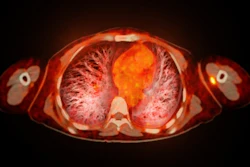
Bayer's investigational PET radiotracer I-124 evuzamitide successfully met primary endpoints in a phase III trial for diagnosing cardiac amyloidosis, demonstrating 94% sensitivity and 86% specificity as a single diagnostic test for both transthyretin and light-chain amyloidosis subtypes.
- Primary Success: I-124 evuzamitide achieved 94% sensitivity and 86% specificity in the REVEAL phase III trial for cardiac amyloidosis diagnosis
- Dual Subtype Detection: The PET agent effectively identified both ATTR (96% sensitivity) and AL (95% sensitivity) amyloidosis subtypes
- Safety Profile: Only one treatment-related adverse event (fatigue) reported among 170 patients receiving the agent
- Clinical Advantage: Serves as a sensitive single diagnostic test where current imaging approaches fall short in detecting cardiac amyloidosis
- Next Steps: Bayer plans FDA submission and regulatory discussions based on JAMA-published results presented at ESC 2026
Bayer said that its investigational PET radiotracer iodine-124 (I-124) evuzamitide met both primary endpoints of a phase III trial testing the agent for diagnosing cardiac amyloidosis.
Presented at the European Society of Cardiology (ESC) 2026 congress in Munich and simultaneously published August 30 in JAMA, results of the REVEAL study suggest that I-124 evuzamitide PET/CT could serve as a sensitive single diagnostic test for both transthyretin amyloidosis (ATTR) and light-chain amyloidosis (AL) subtypes, including cases where current imaging approaches fall short.
"The pivotal study met its primary endpoints in the assessment of sensitivity and specificity for the diagnosis of cardiac amyloidosis based on visual scan interpretation," Bayer said in a statement.
The REVEAL study was initiated by a group from Brigham and Women's Hospital in Boston led by Sharmila Dorbala, MD, MPH. The researchers enrolled 195 adults suspected of having cardiac amyloidosis at 18 U.S. centers from January 2025 to March 2026; 170 received a single intravenous dose of I-124 evuzamitide and underwent cardiac and partial-body PET/CT imaging 3 to 5 hours post-injection. Three physicians independently reviewed the PET/CT images while blinded to clinical data, and an independent expert adjudication committee established the clinical standard of truth. The coprimary endpoints were sensitivity and specificity.
 This figure shows fused I-124 evuzamitide positron emission tomography (PET)/computed tomography (CT) images from patients without amyloidosis and from patients with ATTR cardiac amyloidosis, early ATTR cardiac amyloidosis, light chain cardiac amyloidosis, gelsolin-mediated amyloidosis, and systemic organ amyloid. The columns represent radiological transaxial, sagittal, and coronal views except for the last row middle and far right columns, which are coronal projections. The blue asterisks represent physiological activity (tracer activity in the stomach and esophagus). The arrowheads represent pathological uptake. Note the small amount of cardiac uptake in the basal septum and the basal lateral walls (likely early ATTR cardiac amyloidosis), splenic uptake and pleural uptake in light chain amyloidosis, and cardiac and kidney uptake in gelsolin-mediated amyloidosis. The bright yellow color represents more tracer uptake.JAMA
According to the findings, the overall sensitivity was 94% (95% CI, 85%-98%) and specificity was 86% (95% CI, 77%-92%), with a positive predictive value of 85% and a negative predictive value of 94%. In secondary results, sensitivity for the ATTR subtype reached 96% and for the AL subtype 95%, with specificity of 86% for both. Of the 170 patients who received the agent, only one treatment-emergent adverse event, fatigue, was considered related to I-124 evuzamitide.
"I-124 evuzamitide PET/CT is highly sensitive and specific for diagnosing cardiac amyloidosis with an acceptable safety profile. These results support 1-124 evuzamitide PET/CT as a diagnostic test to evaluate patients with suspected cardiac amyloidosis," the researchers wrote.
The authors suggested that beyond visual interpretation, quantitative I-124 evuzamitide imaging may offer the potential to characterize amyloid burden across the full spectrum from early to advanced disease and to monitor therapeutic response, similar to the established role of F-18 FDG-PET/CT in lymphoma.
Based on the results, Bayer said it plans to discuss the data and a regulatory submission with the U.S. Food and Drug Administration (FDA) and other health authorities.
The full JAMA study is available here.