
A new Nature Reviews Cancer paper examines how molecular imaging techniques like PET and MRI can reveal the biological processes driving cancer growth, treatment resistance, and immune evasion, moving beyond simple tumor detection to provide comprehensive insights into cancer biology and improve patient management strategies.
- Imaging Beyond Location: Molecular imaging now interrogates cancer hallmarks including altered metabolism, proliferation, angiogenesis, invasion, metastasis, and immune evasion.
- Multiple Technologies Combined: PET, MRI, targeted molecular probes, and AI-assisted multiparametric analysis work together to characterize tumor biology and heterogeneity.
- Clinical Applications Emerging: Several approaches already guide surgery planning, radiotherapy, targeted treatments, immunotherapy, and radiopharmaceutical therapies.
- Research-to-Clinic Gap: Many promising probes and imaging biomarkers remain in preclinical or early translational stages, requiring further development.
- TOPIM 2026 Focus: The review provides scientific foundation for ESMI's August 2026 conference on imaging metabolism across scales in Siena, Italy.
A new review published ahead of the European Society for Molecular Imaging’s (ESMI) TOPIM 2026 meeting examines how molecular imaging could move beyond locating tumors to reveal the biological processes driving cancer growth, treatment resistance, and immune evasion.
Published in Nature Reviews Cancer, the review provides a timely scientific backdrop to TOPIM 2026, “Imaging Metabolism Across Scales,” which will take place from 24-28 August in Siena, Italy. ESMI has also provided a complimentary shared version on its website.
Its three corresponding authors are Dr. Jan Grimm of Memorial Sloan Kettering Cancer Center in New York City, Dr. Fabian Kiessling, director of the Institute for Experimental Molecular Imaging at RWTH Aachen University in Germany, and Bernd Pichler, PhD, director of the Werner Siemens Imaging Center at the University of Tübingen in Germany. The paper states that all 12 authors contributed equally.
From tumor location to tumor biology
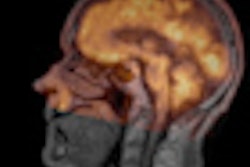
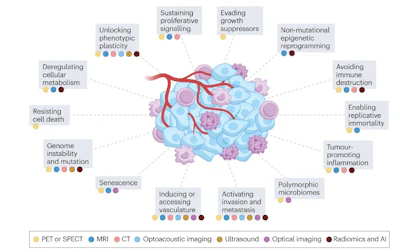
The authors assess how PET, MRI, targeted molecular probes, and AI-assisted multiparametric analysis can be used to interrogate the established hallmarks of cancer.
These include altered metabolism, sustained proliferation, angiogenesis, invasion, metastasis, resistance to cell death, and avoidance of immune destruction. Some hallmarks can be visualized directly using probes targeting specific molecules, while others must be assessed indirectly through associated physiological changes.
The review also considers how radiomics, radiogenomics, and deep learning could combine information from multiple imaging modalities to characterize tumor biology and heterogeneity more comprehensively.
Several of the approaches discussed already have clinical applications, including treatment planning for surgery and radiotherapy, monitoring targeted treatments, and guiding molecularly targeted, immunological, and radiopharmaceutical therapies. However, many emerging probes and imaging biomarkers remain at the preclinical or early translational stage.
From discussions to publication
TOPIM, short for “hot TOPics in IMaging science,” ESMI’s flagship residential conference, is designed to bring together scientists from disciplines that might not otherwise interact and to encourage collaborations across molecular imaging, cancer biology, and translational research.
A central question raised by the review is which biological hallmarks can already be measured reliably enough to influence patient management, and which remain promising research concepts.
The article originated from discussions and collaborations initiated during TOPIM 2024, which focused on imaging the hallmarks of cancer.
The full article can be found here.