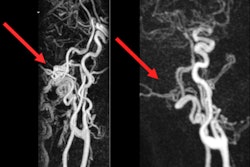
MRI shows that a higher intake of ultraprocessed food is associated with a greater burden of atherosclerotic plaque in the carotid artery, investigators have reported.
The study findings contribute to the "large and consistent evidence on the harmful cardiovascular consequences of ultraprocessed food consumption in the U.S.," wrote a team led by Shutong Du, PhD, of Johns Hopkins University in Baltimore, Maryland. The group's research was published on 24 July in the American Journal of Preventive Cardiology.
"Our results revealed significant associations between higher ultraprocessed food intake and greater atherosclerotic plaque burden, which are key predictors of future cardiovascular events, including stroke and coronary heart disease," the group noted.
The consumption of ultraprocessed food and beverages has been linked to adverse cardiovascular events, but the association with subclinical disease remains unclear, the team explained. To address this knowledge gap, Du's group conducted research that included 768 white participants from the Carotid MRI visit (2004-2005) in the Atherosclerosis Risk in Communities (ARIC) study.
The team assessed each participant's dietary intake via a 148-item food frequency questionnaire, with food classified by four Nova processing levels: unprocessed or minimally processed foods, processed culinary ingredients, processed foods, and ultraprocessed foods. All patients underwent carotid artery MRI.
The researchers found the following:
- Higher ultraprocessed food consumption was associated with unfavorable carotid plaque characteristics.
- Participants in quartile four (highest 25th percentile) of ultraprocessed food consumption had greater total wall volume (standardized difference: beta = 0.28), total lipid core volume (beta = 0.55), maximum segmental wall thickness (beta = 0.23), and maximum lipid core area (beta = 0.49) compared with quartile one (lowest 25th percentile) participants.
- Replacing one daily serving of ultraprocessed food with unprocessed or minimally processed food was associated with a reduction in total wall volume (beta = -0.02).
"Our findings support the need for further investigation into the potential impact of ultraprocessed food on atherosclerotic changes and the underlying mechanisms by which it may increase the future risk of cardiovascular disease development," the group concluded.
The complete study can be found here.




![Overview of the study design. (A) The fully automated deep learning framework was developed to estimate body composition (BC) (defined as subcutaneous adipose tissue [SAT] in liters; visceral adipose tissue [VAT] in liters; skeletal muscle [SM] in liters; SM fat fraction [SMFF] as a percentage; and intramuscular adipose tissue [IMAT] in deciliters) from MRI. The fully automated framework comprised one model (model 1) to quantify different BC measures (SAT, VAT, SM, SMFF, and IMAT) as three-dimensional (3D) measures from whole-body MRI scans. The second model (model 2) was trained to identify standardized anatomic landmarks along the craniocaudal body axis (z coordinate field), which allowed for subdividing the whole-body measures into different subregions typically examined on clinical routine MRI scans (chest, abdomen, and pelvis). (B) BC was quantified from whole-body MRI in over 66,000 individuals from two large population-based cohort studies, the UK Biobank (UKB) (36,317 individuals) and the German National Cohort (NAKO) (30,291 individuals). Bar graphs show age distribution by sex and cohort. BMI = body mass index. (C) After the performance assessment of the fully automated framework, the change in BC measures, distributions, and profiles across age decades were investigated. Age-, sex-, and height-adjusted body composition reference curves were calculated and made publicly available in a web-based z-score calculator (https://circ-ml.github.io).](https://img.auntminnieeurope.com/mindful/smg/workspaces/default/uploads/2026/05/body-comp.XgAjTfPj1W.jpg?auto=format%2Ccompress&fit=crop&h=100&q=70&w=100)


![Overview of the study design. (A) The fully automated deep learning framework was developed to estimate body composition (BC) (defined as subcutaneous adipose tissue [SAT] in liters; visceral adipose tissue [VAT] in liters; skeletal muscle [SM] in liters; SM fat fraction [SMFF] as a percentage; and intramuscular adipose tissue [IMAT] in deciliters) from MRI. The fully automated framework comprised one model (model 1) to quantify different BC measures (SAT, VAT, SM, SMFF, and IMAT) as three-dimensional (3D) measures from whole-body MRI scans. The second model (model 2) was trained to identify standardized anatomic landmarks along the craniocaudal body axis (z coordinate field), which allowed for subdividing the whole-body measures into different subregions typically examined on clinical routine MRI scans (chest, abdomen, and pelvis). (B) BC was quantified from whole-body MRI in over 66,000 individuals from two large population-based cohort studies, the UK Biobank (UKB) (36,317 individuals) and the German National Cohort (NAKO) (30,291 individuals). Bar graphs show age distribution by sex and cohort. BMI = body mass index. (C) After the performance assessment of the fully automated framework, the change in BC measures, distributions, and profiles across age decades were investigated. Age-, sex-, and height-adjusted body composition reference curves were calculated and made publicly available in a web-based z-score calculator (https://circ-ml.github.io).](https://img.auntminnieeurope.com/mindful/smg/workspaces/default/uploads/2026/05/body-comp.XgAjTfPj1W.jpg?auto=format%2Ccompress&fit=crop&h=112&q=70&w=112)