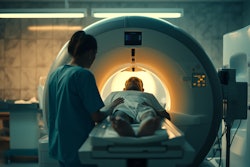
A major MRI accident has occurred at Kocaeli University Radiology Department in the city of Izmit, around 100 km southeast of Istanbul, according to an article in the local media. The accident reportedly happened while the MRI machine was in operation. It resulted in a metal stretcher in the room sticking to the machine, trapping a patient inside it for several hours and causing damage to the value of 30 million Turkish Lira (TL) (€839,000). The patient was eventually rescued after a sustained effort by paramedics.
The accident took place during the MRI scan of a patient being treated at Kocaeli University’s Umuttepe Medical Faculty Radiology Department. As the patient was taken to the machine on a metal stretcher, the stretcher was pulled towards it and stuck to the machine, in what was described by the report on 12 July 2024 as a "very noisy" incident.
Appointment delays
After the accident, staff from the company that installed the MRI device came to the hospital for a fee of 1 million TL (€28,000) to assess the damage, and they determined the repairs would cost 30 million TL (€839,000), stated the article posted by publisher Mavi Marmara Gazetesi. The work is expected to take six to seven months to complete, during which time the MRI appointments of thousands of patients will have to be postponed.
The hospital administration has not yet made an official statement about the incident, but an administrative investigation is expected to identify those responsible and impose the necessary sanctions, according to the report.
This is not the first MRI accident in Turkey in recent years. In 2019 a patient narrowly escaped death in an Ankara hospital when a 70 cm-long wrench left in the MRI room was sucked into the scanner, seriously injuring the arm of a young female patient undergoing a scan. The outcome would have been different had the wrench hit the patient’s head, noted commentators at the time.




![Overview of the study design. (A) The fully automated deep learning framework was developed to estimate body composition (BC) (defined as subcutaneous adipose tissue [SAT] in liters; visceral adipose tissue [VAT] in liters; skeletal muscle [SM] in liters; SM fat fraction [SMFF] as a percentage; and intramuscular adipose tissue [IMAT] in deciliters) from MRI. The fully automated framework comprised one model (model 1) to quantify different BC measures (SAT, VAT, SM, SMFF, and IMAT) as three-dimensional (3D) measures from whole-body MRI scans. The second model (model 2) was trained to identify standardized anatomic landmarks along the craniocaudal body axis (z coordinate field), which allowed for subdividing the whole-body measures into different subregions typically examined on clinical routine MRI scans (chest, abdomen, and pelvis). (B) BC was quantified from whole-body MRI in over 66,000 individuals from two large population-based cohort studies, the UK Biobank (UKB) (36,317 individuals) and the German National Cohort (NAKO) (30,291 individuals). Bar graphs show age distribution by sex and cohort. BMI = body mass index. (C) After the performance assessment of the fully automated framework, the change in BC measures, distributions, and profiles across age decades were investigated. Age-, sex-, and height-adjusted body composition reference curves were calculated and made publicly available in a web-based z-score calculator (https://circ-ml.github.io).](https://img.auntminnieeurope.com/mindful/smg/workspaces/default/uploads/2026/05/body-comp.XgAjTfPj1W.jpg?auto=format%2Ccompress&fit=crop&h=100&q=70&w=100)


![Overview of the study design. (A) The fully automated deep learning framework was developed to estimate body composition (BC) (defined as subcutaneous adipose tissue [SAT] in liters; visceral adipose tissue [VAT] in liters; skeletal muscle [SM] in liters; SM fat fraction [SMFF] as a percentage; and intramuscular adipose tissue [IMAT] in deciliters) from MRI. The fully automated framework comprised one model (model 1) to quantify different BC measures (SAT, VAT, SM, SMFF, and IMAT) as three-dimensional (3D) measures from whole-body MRI scans. The second model (model 2) was trained to identify standardized anatomic landmarks along the craniocaudal body axis (z coordinate field), which allowed for subdividing the whole-body measures into different subregions typically examined on clinical routine MRI scans (chest, abdomen, and pelvis). (B) BC was quantified from whole-body MRI in over 66,000 individuals from two large population-based cohort studies, the UK Biobank (UKB) (36,317 individuals) and the German National Cohort (NAKO) (30,291 individuals). Bar graphs show age distribution by sex and cohort. BMI = body mass index. (C) After the performance assessment of the fully automated framework, the change in BC measures, distributions, and profiles across age decades were investigated. Age-, sex-, and height-adjusted body composition reference curves were calculated and made publicly available in a web-based z-score calculator (https://circ-ml.github.io).](https://img.auntminnieeurope.com/mindful/smg/workspaces/default/uploads/2026/05/body-comp.XgAjTfPj1W.jpg?auto=format%2Ccompress&fit=crop&h=112&q=70&w=112)