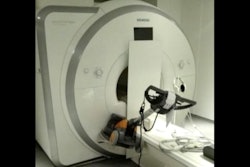
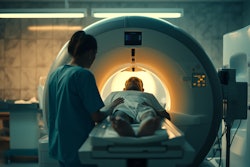
What has been called a "freak accident" at a California healthcare facility in April highlights a lack of standard reporting mechanisms and oversight in MRI safety incidents, according to a 6 September report from Fox KTVU.
In this case, a trainee reportedly brought a non-MRI-safe wheelchair into a Sutter Health Mountain View facility's MRI environment causing a dangerous reaction with the magnets -- "the wheelchair was sucked across the room, attaching itself sideways to the MRI scanner door, narrowly missing the patient."
The California Department of Public Health's radiological health branch was informed through a public inquiry but said MRI is outside their jurisdiction, KTVU noted in its coverage. In addition, the California Medical Board referred KTVU back to the California Department of Public Health for information about the matter, according to KTVU.
MRI safety advocate Tobias Gilk told AuntMinnieEurope.com via email that there appears to be a gap in California's statutory language regulating radiology, language that is specific to MRI. Gilk is the founder of Gilk Radiology Consultants in Overland Park, Kansas, and senior vice president of Radiology-Planning in Mission, Kansas.
"Their statutes identify ionizing radiation devices (such as x-ray, CT, and nuclear medicine), but only recognize ultrasound and thermography the non-ionizing imaging modalities in the statute," Gilk explained. "Their enabling statutes don't even acknowledge that MRI exists. I suppose it's not terribly surprising that these agencies are all playing 'pass the buck.' "
For KTVU , Gilk highlighted the need for an agency to standardize reporting and enforce consequences.
Sutter Health told KTVU that it adheres to strict standards and reports to the appropriate oversight and accreditation bodies as required, KTVU noted. Sutter added that no one was seriously injured and corrective action was promptly taken.



![Overview of the study design. (A) The fully automated deep learning framework was developed to estimate body composition (BC) (defined as subcutaneous adipose tissue [SAT] in liters; visceral adipose tissue [VAT] in liters; skeletal muscle [SM] in liters; SM fat fraction [SMFF] as a percentage; and intramuscular adipose tissue [IMAT] in deciliters) from MRI. The fully automated framework comprised one model (model 1) to quantify different BC measures (SAT, VAT, SM, SMFF, and IMAT) as three-dimensional (3D) measures from whole-body MRI scans. The second model (model 2) was trained to identify standardized anatomic landmarks along the craniocaudal body axis (z coordinate field), which allowed for subdividing the whole-body measures into different subregions typically examined on clinical routine MRI scans (chest, abdomen, and pelvis). (B) BC was quantified from whole-body MRI in over 66,000 individuals from two large population-based cohort studies, the UK Biobank (UKB) (36,317 individuals) and the German National Cohort (NAKO) (30,291 individuals). Bar graphs show age distribution by sex and cohort. BMI = body mass index. (C) After the performance assessment of the fully automated framework, the change in BC measures, distributions, and profiles across age decades were investigated. Age-, sex-, and height-adjusted body composition reference curves were calculated and made publicly available in a web-based z-score calculator (https://circ-ml.github.io).](https://img.auntminnieeurope.com/mindful/smg/workspaces/default/uploads/2026/05/body-comp.XgAjTfPj1W.jpg?auto=format%2Ccompress&fit=crop&h=100&q=70&w=100)


![Overview of the study design. (A) The fully automated deep learning framework was developed to estimate body composition (BC) (defined as subcutaneous adipose tissue [SAT] in liters; visceral adipose tissue [VAT] in liters; skeletal muscle [SM] in liters; SM fat fraction [SMFF] as a percentage; and intramuscular adipose tissue [IMAT] in deciliters) from MRI. The fully automated framework comprised one model (model 1) to quantify different BC measures (SAT, VAT, SM, SMFF, and IMAT) as three-dimensional (3D) measures from whole-body MRI scans. The second model (model 2) was trained to identify standardized anatomic landmarks along the craniocaudal body axis (z coordinate field), which allowed for subdividing the whole-body measures into different subregions typically examined on clinical routine MRI scans (chest, abdomen, and pelvis). (B) BC was quantified from whole-body MRI in over 66,000 individuals from two large population-based cohort studies, the UK Biobank (UKB) (36,317 individuals) and the German National Cohort (NAKO) (30,291 individuals). Bar graphs show age distribution by sex and cohort. BMI = body mass index. (C) After the performance assessment of the fully automated framework, the change in BC measures, distributions, and profiles across age decades were investigated. Age-, sex-, and height-adjusted body composition reference curves were calculated and made publicly available in a web-based z-score calculator (https://circ-ml.github.io).](https://img.auntminnieeurope.com/mindful/smg/workspaces/default/uploads/2026/05/body-comp.XgAjTfPj1W.jpg?auto=format%2Ccompress&fit=crop&h=112&q=70&w=112)