Dear AuntMinnieEurope Member,
Tax-free salaries, happy staff, compliant patients, and a hot, sunny climate -- that's what tempts expatriate radiologists to the Middle East. Amid the gathering economic gloom and uncertainty in Europe, it's no surprise that people are making the switch to work there.
The award-winning Al Ain Hospital in Abu Dhabi typifies the region's growing number of modern hospitals with a strong emphasis on imaging. An Austrian and a Finn are among the senior management team in the radiology department, and we interviewed them about their experiences. Click here to find out more.
Closer to home, the German Radiological Society's annual meeting, the DRK, started in Hamburg today, and we spoke with congress president Dr. Hermann Helmberger from Munich. Click here to read about his views. Also, we will be posting further reports from this important event over the next week, so make sure you log back in.
It's exactly 40 years since the first descriptions of CT, and to mark the occasion, our history columnist Dr. Adrian Thomas reflects on the lesser-known facts about Sir Godfrey Hounsfield. Visit our CT Digital Community, or click here.
Our editorial board plays a crucial advisory role. Members develop case reports for us, contribute story ideas, answer technical queries, and attend our annual strategy meeting at the European Congress of Radiology (ECR). Five new members have joined this month, and you can read about them here.
The European Society for Radiotherapy and Oncology (ESTRO) meeting took place in Barcelona last week. French researchers are delivering radiotherapy directly to cancer of the cervix using 3D imaging techniques, and the technique is proving effective at controlling the return and spread of the disease. Visit our Advanced Visualization Digital Community, or click here. For our other ESTRO reports, go to our home page.
If you or your colleagues prefer to read in your native language, don't forget to visit our archives of translated case reports and articles. For French, click here. For Italian, click here. For Spanish, click here. Remember to tell all your friends about this free service.

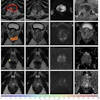


![Overview of the study design. (A) The fully automated deep learning framework was developed to estimate body composition (BC) (defined as subcutaneous adipose tissue [SAT] in liters; visceral adipose tissue [VAT] in liters; skeletal muscle [SM] in liters; SM fat fraction [SMFF] as a percentage; and intramuscular adipose tissue [IMAT] in deciliters) from MRI. The fully automated framework comprised one model (model 1) to quantify different BC measures (SAT, VAT, SM, SMFF, and IMAT) as three-dimensional (3D) measures from whole-body MRI scans. The second model (model 2) was trained to identify standardized anatomic landmarks along the craniocaudal body axis (z coordinate field), which allowed for subdividing the whole-body measures into different subregions typically examined on clinical routine MRI scans (chest, abdomen, and pelvis). (B) BC was quantified from whole-body MRI in over 66,000 individuals from two large population-based cohort studies, the UK Biobank (UKB) (36,317 individuals) and the German National Cohort (NAKO) (30,291 individuals). Bar graphs show age distribution by sex and cohort. BMI = body mass index. (C) After the performance assessment of the fully automated framework, the change in BC measures, distributions, and profiles across age decades were investigated. Age-, sex-, and height-adjusted body composition reference curves were calculated and made publicly available in a web-based z-score calculator (https://circ-ml.github.io).](https://img.auntminnieeurope.com/mindful/smg/workspaces/default/uploads/2026/05/body-comp.XgAjTfPj1W.jpg?auto=format%2Ccompress&fit=crop&h=100&q=70&w=100)


![Overview of the study design. (A) The fully automated deep learning framework was developed to estimate body composition (BC) (defined as subcutaneous adipose tissue [SAT] in liters; visceral adipose tissue [VAT] in liters; skeletal muscle [SM] in liters; SM fat fraction [SMFF] as a percentage; and intramuscular adipose tissue [IMAT] in deciliters) from MRI. The fully automated framework comprised one model (model 1) to quantify different BC measures (SAT, VAT, SM, SMFF, and IMAT) as three-dimensional (3D) measures from whole-body MRI scans. The second model (model 2) was trained to identify standardized anatomic landmarks along the craniocaudal body axis (z coordinate field), which allowed for subdividing the whole-body measures into different subregions typically examined on clinical routine MRI scans (chest, abdomen, and pelvis). (B) BC was quantified from whole-body MRI in over 66,000 individuals from two large population-based cohort studies, the UK Biobank (UKB) (36,317 individuals) and the German National Cohort (NAKO) (30,291 individuals). Bar graphs show age distribution by sex and cohort. BMI = body mass index. (C) After the performance assessment of the fully automated framework, the change in BC measures, distributions, and profiles across age decades were investigated. Age-, sex-, and height-adjusted body composition reference curves were calculated and made publicly available in a web-based z-score calculator (https://circ-ml.github.io).](https://img.auntminnieeurope.com/mindful/smg/workspaces/default/uploads/2026/05/body-comp.XgAjTfPj1W.jpg?auto=format%2Ccompress&fit=crop&h=112&q=70&w=112)