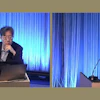
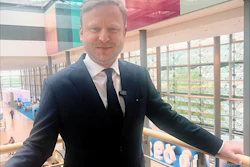
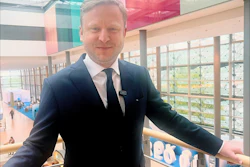
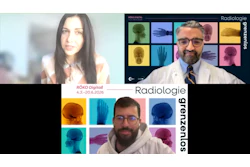
At RöKo 2026, the new Campus for IR, with simulation areas, case presentations, and hands-on training, is designed to attract the younger generation, reveals Professor Marcus Katoh, chief of radiology at Helios Hospital Krefeld, in a video interview at the congress.
But Katoh is clear-eyed about the road ahead. Position papers may say IR is essential for cancer care, but recognition varies wildly across Germany. IR's origins as a diagnostic, cross-sectional discipline without its own revenue stream mean that visibility depends on individual radiologists willing to communicate -- with patients, referring colleagues, hospital leadership, and politicians.
 Professor Marcus Katoh, Chief of Radiology at Helios Hospital Krefeld, excited about the new DeGIR Campus at RöKo 2026, where interventional radiology is gaining momentum with hands-on training and engaged young radiologists.Claudia Tschabuschnig
Unlike many voices in German radiology, Katoh brings a perspective from outside the academic centers. He works in Germany's largest private hospital system, where interventional radiology faces different structural challenges than at university hospitals.
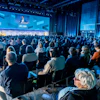
At the DeGir campus (German Society for Interventional Radiology and Minimally Invasive Therapy) at RöKo, he sees packed sessions, engaged residents, and a generation that sees radiology not as diagnostics or therapy, but as both. "It gives me a good feeling about our future," he says.
Our full coverage of RöKo 2026 can be found here.