Leipzig -- Germany's hospitals are in crisis. 91% of municipal hospitals generate losses and there's a 4% revenue gap from uncompensated 2022–2023 inflation. Without intervention, 50% of hospitals face insolvency risk by 2030.
The German federal government has committed a €50 billion transformation fund to restructure the system from volume-based to quality-based care, anchored in a new payment model called service groups. But where does radiology fit in this new structure?
The answer, according to a session at RöKo 2026, is unclear. Radiology is not revenue-relevant in the current service group framework, as Professor Wessling from Münster stated. The reform defines 61 so-called service groups, but radiology lacks a dedicated category. That means radiological services, despite being essential to diagnostics, screening, and interventional oncology, are not explicitly recognized as revenue-generating in the new model.
Existential care bottleneck: Pediatric radiology
If radiology remains invisible in the payment system, departments risk being systematically underfunded just as AI implementation, Germany's new lung cancer screening program, and the expansion of interventional radiology demand more investment, not less.
One specialty is facing an existential care bottleneck: pediatric radiology. Wessling flagged a crisis that barely registers in the reform debate: Germany has 147 qualified pediatric radiologists (roughly one specialist for every 95,000 children, ed.), but only five certification exams took place in 2025. The specialty is disappearing, and the hospital reform does nothing to address it. Pediatric radiology is not even represented in the service group structure. Pediatric medicine, Wessling warned, is at risk if it remains revenue-irrelevant in the new system.
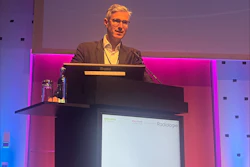
 "Small specialty groups need to actively shape the hospital law," warns Paula Piechotta (Bundestag, physician) at RöKo 2026.Claudia Tschabuschnig
Piechotta dismissed "lazy" comparisons to Denmark, noting that Germany lacks the decades of centralization that anchored the Danish model. She also pointed to the need for clustering, not just within radiology, but across nuclear medicine and other imaging specialties to maintain comprehensive care.
Baseline funding for infrastructure, staffing
Dirk Köcher, a hospital management expert, laid out the scale of the crisis: hospitals are carrying €9 billion in accumulated debt, staff shortages are acute, and the current DRG system incentivizes volume over outcomes. The reform aims to fix that by shifting to baseline funding for infrastructure and staffing, combined with case-based payments only for defined service groups.
 Dirk Köcher (hospital management expert) and Paula Piechotta (member of the Bundestag and physician) debated Germany's hospital reform at RöKo 2026, a rare moment of open conflict between policy and practice.Claudia Tschabuschnig
For radiology, the stakes are particularly high. Specialties such as pediatric radiology, nuclear medicine, and interventional radiology cannot afford to wait for recognition; they need to actively shape the law. Otherwise, the reform may leave radiology structurally disadvantaged for a generation, and pediatric radiology may disappear altogether.
Our full coverage of RöKo 2026 can be found here.