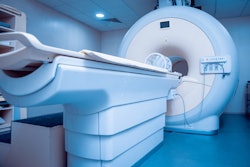
A 61-year-old man has died after an incident in an MRI scanning room in Long Island, New York, according to media reports.
The man, who has was not named in the initial police report filed on 17 July by the Nassau County Police Department, entered an MRI scanning room at Nassau Open MRI while wearing a large metal chain around his neck. This caused the man to be drawn into the MRI machine, resulting in a medical episode, the report stated.
Medical personnel transported him to a local hospital, where he was listed as being in a critical condition, according to the police report.
CBS News reported on 19 July that the man had subsequently died (cbsnews.com/newyork/news/man-sucked-into-mri-machine-dies/). Police said a witness told them the man defied orders to stay out of the room after he heard a patient, his relative, screaming during a scan, CBS News noted. When he entered the scanner, the magnetic force pulled the chain around his neck and caused him to be drawn into machine as well, police said.
An article posted on 20 July by the Irish Star (irishstar.com/news/us-news/wife-man-who-died-being-35586205) explained that Adrienne Jones-McAllister's husband Keith was helping his wife as she was set to have a knee MRI exam, but he was killed after he was sucked into the machine.
The man was accompanying his wife on Wednesday afternoon at the Nassau Open MRI in Westbury to help her get from the table to her feet, the article noted. He usually wears a 20-pound (9 kg) chain around his neck as part of his weight training, and this led to the fatal incident, she told the Irish Star.
She and the MRI technician both attempted to pull him from the machine, but failed to get him out. “His body went limp. He went limp in my arms and this is still pulsating in my brain," she said to the Irish Star.



![Overview of the study design. (A) The fully automated deep learning framework was developed to estimate body composition (BC) (defined as subcutaneous adipose tissue [SAT] in liters; visceral adipose tissue [VAT] in liters; skeletal muscle [SM] in liters; SM fat fraction [SMFF] as a percentage; and intramuscular adipose tissue [IMAT] in deciliters) from MRI. The fully automated framework comprised one model (model 1) to quantify different BC measures (SAT, VAT, SM, SMFF, and IMAT) as three-dimensional (3D) measures from whole-body MRI scans. The second model (model 2) was trained to identify standardized anatomic landmarks along the craniocaudal body axis (z coordinate field), which allowed for subdividing the whole-body measures into different subregions typically examined on clinical routine MRI scans (chest, abdomen, and pelvis). (B) BC was quantified from whole-body MRI in over 66,000 individuals from two large population-based cohort studies, the UK Biobank (UKB) (36,317 individuals) and the German National Cohort (NAKO) (30,291 individuals). Bar graphs show age distribution by sex and cohort. BMI = body mass index. (C) After the performance assessment of the fully automated framework, the change in BC measures, distributions, and profiles across age decades were investigated. Age-, sex-, and height-adjusted body composition reference curves were calculated and made publicly available in a web-based z-score calculator (https://circ-ml.github.io).](https://img.auntminnieeurope.com/mindful/smg/workspaces/default/uploads/2026/05/body-comp.XgAjTfPj1W.jpg?auto=format%2Ccompress&fit=crop&h=100&q=70&w=100)


![Overview of the study design. (A) The fully automated deep learning framework was developed to estimate body composition (BC) (defined as subcutaneous adipose tissue [SAT] in liters; visceral adipose tissue [VAT] in liters; skeletal muscle [SM] in liters; SM fat fraction [SMFF] as a percentage; and intramuscular adipose tissue [IMAT] in deciliters) from MRI. The fully automated framework comprised one model (model 1) to quantify different BC measures (SAT, VAT, SM, SMFF, and IMAT) as three-dimensional (3D) measures from whole-body MRI scans. The second model (model 2) was trained to identify standardized anatomic landmarks along the craniocaudal body axis (z coordinate field), which allowed for subdividing the whole-body measures into different subregions typically examined on clinical routine MRI scans (chest, abdomen, and pelvis). (B) BC was quantified from whole-body MRI in over 66,000 individuals from two large population-based cohort studies, the UK Biobank (UKB) (36,317 individuals) and the German National Cohort (NAKO) (30,291 individuals). Bar graphs show age distribution by sex and cohort. BMI = body mass index. (C) After the performance assessment of the fully automated framework, the change in BC measures, distributions, and profiles across age decades were investigated. Age-, sex-, and height-adjusted body composition reference curves were calculated and made publicly available in a web-based z-score calculator (https://circ-ml.github.io).](https://img.auntminnieeurope.com/mindful/smg/workspaces/default/uploads/2026/05/body-comp.XgAjTfPj1W.jpg?auto=format%2Ccompress&fit=crop&h=112&q=70&w=112)