Neuroradiology researchers at neuroRAD 2026 presented rapid-fire innovations including AI-driven MRI reconstruction that reduces scan time by 29%, portable bedside MRI achieving diagnostic quality in 87% of cases, and conversational AI agents for patient communication, demonstrating how complex medical research can be effectively communicated and applied in clinical practice.
- Deep-learning MRI reconstruction reduced acute stroke imaging scan time by 29% while improving image quality and maintaining lesion detection accuracy
- Portable ultra-low-field MRI achieved diagnostic image quality in 87% of bedside examinations for critically ill neurological patients
- Opportunistic osteoporosis screening identified low bone density in approximately 28% of patients, requiring adjustments to surgical planning
- Conversational AI agents for patient consent generated comparable trust levels to physician-led explanations despite technical limitations
- PowerPitches format enabled researchers to present years of work in minutes, efficiently covering AI imaging, dose reduction, and surgical planning innovations
Can complex scientific research be presented in just a few minutes? Formats such as the popular Three Minute Thesis competition, in which researchers condense years of work into a three-minute presentation, have demonstrated the appeal of communicating science under tight time constraints.
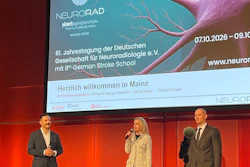
At neuroRAD 2026 in Mainz, the traditional scientific presentation format was also put to the test. During the PowerPitches sessions, researchers had only a few minutes to present their findings, with a stopwatch counting down behind them.
The rapid-fire format offered the audience a remarkably dense overview of emerging developments across neuroradiology, efficiently packing numerous research presentations into a short session.
Topics ranged from artificial intelligence (AI) and faster imaging techniques to radiation dose reduction, surgical planning, and new approaches to patient communication.
From AI-powered imaging and radiation dose reduction to bedside MRI
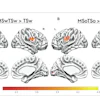
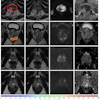
Among the presentations was a prospective study involving 106 patients that investigated deep-learning-based MRI reconstruction in acute stroke imaging. The researchers reported a 29% reduction in scan time, alongside improvements in image sharpness, noise, and artifact ratings, while maintaining comparable lesion detection.
Another presentation examined the potential of opportunistic osteoporosis screening using existing CT examinations. The findings suggested that previously unrecognized low bone density could influence surgical planning, with approximately 28% of patients reportedly requiring adjustments to their operative strategy.
Portable MRI was another topic. Researchers presented their experience with ultra-low-field MRI performed directly at the bedside of critically ill neurological patients. Diagnostic image quality was reportedly achieved in approximately 87% of examinations in one patient group, suggesting that the technology could complement conventional imaging when transporting patients is difficult.
AI applications extended beyond image acquisition and reconstruction. One research group introduced a conversational AI agent designed to support patient information and informed consent. In a comparative evaluation, patients reportedly expressed similar levels of trust in AI-assisted and physician-led explanations, although technical limitations remained.
Our full coverage of neurorad 2026 can be found here.