ASHNR held its 60th annual meeting in Pittsburgh with over 600 participants, featuring comprehensive head and neck imaging education, interactive case discussions, and joint sessions with European colleagues to advance radiological expertise and professional relationships.
- ASHNR's 60th annual meeting took place in Pittsburgh from September 23-27, attracting more than 600 registered participants
- The five-day program covered diverse topics including cancer imaging, skull-base disease, temporal bone pathology, infections, and ultrasound-guided procedures
- New "Head to Head" sessions challenged radiologists to distinguish between diseases with similar radiological appearances
- Joint sessions with ESHNR fostered European-American collaboration on visceral-space imaging and sinus anatomy
- Beyond science, the congress emphasized professional relationship-building through social activities including yoga, river walks, and networking events
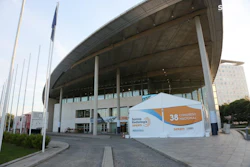
Last week the American Society of Head and Neck Radiology (ASHNR) held its 60th Annual Meeting in Pittsburgh, Pennsylvania, from 23–27 September, bringing together more than 600 registered participants, according to European Society of Head and Neck Radiology (ESHNR) President Dr. Soraya Robinson.
Robinson, who attended as a speaker, moderator, and participant, said that the meeting combined education, scientific presentations, practical case discussions, and electronic posters, with sessions generally well attended.
Founded in Chicago in 1976, ASHNR has grown into an international professional society. According to society figures, it currently counts 1,067 active members, including 123 international members, with 31 countries represented and 110 new members joined this year. ASHNR says its mission includes advancing knowledge in head and neck radiology, fostering education, and providing a forum for scientific exchange.
The five-day scientific program covered a broad range of head and neck imaging, including anatomy, cancer imaging, skull-base disease, temporal bone pathology, infections, advanced imaging techniques, and ultrasound-guided procedures. New “Head to Head” sessions challenged participants to distinguish between diseases with similar radiological appearances, while interactive case-based workshops allowed attendees to review complete studies before discussing the findings with experts.
Joint sessions with ESHNR
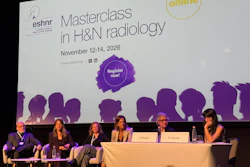
European collaboration was also part of the program through joint ASHNR-ESHNR sessions. Robinson moderated a collaborative session on visceral-space imaging and delivered a lecture on sinus anatomy.
Another highlight was the presentation of the ASHNR Gold Medal to Boston-based pediatric neuroradiologist Dr. Caroline Robson, who also delivered the Valvassori Lecture on pediatric temporal bone imaging.
Beyond the science, ASHNR President-Elect and Program Chair Dr. Barton Branstetter emphasized the social dimension of onsite congresses, Robinson told AuntMinnieEurope, something whose value, he suggested, became particularly clear following the COVID-19 pandemic.
That emphasis was also reflected in the program that included morning yoga, a fun run, river walks, excursions, receptions, and a congress gala alongside the scientific sessions.
For Robinson, the meeting showed both sides of an international congress: scientific exchange inside the lecture hall and the professional relationships built around it.