The 63rd German Society of Pediatric Radiology meeting in September 2026 emphasizes prioritizing child safety and comfort over new technology adoption, featuring innovations like contrast-free MRI, low-dose CT with 75% dose reduction, and AI applications that demonstrate tangible benefits for young patients.
- The GPR 2026 conference in Tübingen (September 24-26) expects over 200 physicians and radiologic technologists focused on reducing imaging burden on children
- Contrast-free, free-breathing MR angiography showed similar image quality to conventional MRA in 30 children while avoiding contrast administration and breath-holding
- Extreme-low-dose photon-counting CT achieved a 75% radiation dose reduction to 0.03 mSv while maintaining high diagnostic confidence in pediatric lung imaging
- Deep learning shortened pediatric lung MRI acquisition time by 25% and whole-body oncology MRI from 10.4 to 4.2 minutes without compromising lesion detection
- The conference's central philosophy: new technology is not an end in itself, but must provide tangible clinical benefit to individual children
Reducing the burden of imaging on children will be a major focus of the 63rd Annual Meeting of the German Society of Pediatric Radiology (GPR), taking place from 24 to 26 September in Tübingen, Germany.
More than 200 physicians and radiologic technologists are expected at the meeting, according to a press release from the German Radiological Society (DRG). Held under the motto “Pediatric radiology gets involved" ("Die Kinderradiologie mischt sich ein", ed.) the congress promotes pediatric radiology's active role in clinical decision-making.
The program spans from pediatric oncology, congenital heart disease, musculoskeletal imaging, interventions, photon-counting CT, whole-body MRI, AI, to PET/CT.
Finding gentler alternatives
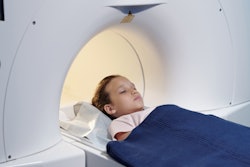
A particular focus is on making examinations safer and less stressful for children, including radiation protection, avoiding unnecessary anesthesia, and MRI without sedation in very young patients.
One abstract suggests that contrast-free, free-breathing MR angiography could offer a less burdensome alternative for young children with Fontan circulation.
Researchers at University Hospital Erlangen examined 30 children, mean age 3.6 years, and compared conventional contrast-enhanced MRA with a noncontrast technique performed during free breathing. Acquisition time was almost identical, while image quality was similar across most vascular segments. Dixon fat suppression was rated excellent in 97% of noncontrast datasets, and vessel measurements showed no significant differences.
The approach could avoid contrast administration and breath-hold commands and potentially reduce the need for mechanical ventilation, although the small single-center study still requires broader validation.
Less dose, shorter scans
Other abstracts point in the same direction (read the full list here). An extreme-low-dose photon-counting CT study in 40 children reported a 75% dose reduction for pediatric lung imaging, to 0.03 mSv, while diagnostic confidence remained high.
Deep learning also helped shorten MRI. Pediatric lung MRI acquisition time fell by 25%, while another whole-body MRI study in pediatric oncology cut scan time from 10.4 to 4.2 minutes, with 98% of bone lesions still detectable.
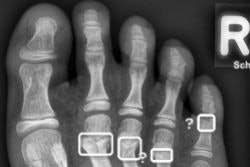
AI gets a reality check too. In more than 300 pediatric ultrasound examinations, AI-assisted reporting shortened the reporting phase but did not significantly reduce overall patient time. General-purpose open-source vision-language models also achieved accuracies below 70% in pediatric fracture detection and were considered not ready for diagnostic use without specific training.
Benefit before novelty
Taken together, many of the abstracts circle around a central question: not whether new technology can be used in pediatric imaging, but whether it provides a tangible benefit for the individual child.
As congress president Prof. Jürgen F. Schäfer puts it: "Neue Technik ist kein Selbstzweck", new technology is not an end in itself.