Dear AuntMinnieEurope Member,
The rapid growth of PET/CT has focused attention on the radiation dose being given to patients, and a comprehensive new national survey from France will only add to these concerns. The study involving 56 of the country's 90 PET/CT systems has identified substantial variations in the practice of nuclear medicine departments. Go to our Molecular Imaging Digital Community, or click here.
The German Radiological Society's annual meeting, the DRK, is now the third largest radiological congress in Europe, after the European Congress of Radiology (ECR) and the French national radiology congress, the JFR. DRK 2012 in Hamburg attracted more than 7,500 attendees, including our two new editorial advisers. To get their verdict on the meeting, click here. We have also published news reports from the DRK about the latest advances in carotid plaque imaging in stroke and high-field MRI microscopy.
The 31st meeting of the Spanish national radiology society, SERAM, begins in Granada on Friday. After two years in the post, Dr. Eduardo Fraile Moreno is standing down as SERAM president, and he shares his views on the current status of radiology in his country. Get the story here. Now that he's got a little more spare time, he's no doubt relishing the prospect of watching more Real Madrid fixtures at the Estádio de Santiago Bernabéu!
A major contributor to preventable medical errors is communication breakdown between managing and consulting physicians -- and many of these errors are due to radiology reports, according to a new study. Click here to find out more.
The Computer Assisted Radiology and Surgery (CARS) meeting is starting to loom large on the congress calendar. We look ahead to next month's event in Pisa, Italy, by speaking with Dr. Davide Caramella. Visit our PACS Digital Community, or click here.
A celebration of the achievements of a remarkable radiographer, Marion Frank, took place in London last weekend. You can read Dr. Adrian Thomas' report here.

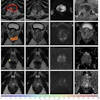


![Overview of the study design. (A) The fully automated deep learning framework was developed to estimate body composition (BC) (defined as subcutaneous adipose tissue [SAT] in liters; visceral adipose tissue [VAT] in liters; skeletal muscle [SM] in liters; SM fat fraction [SMFF] as a percentage; and intramuscular adipose tissue [IMAT] in deciliters) from MRI. The fully automated framework comprised one model (model 1) to quantify different BC measures (SAT, VAT, SM, SMFF, and IMAT) as three-dimensional (3D) measures from whole-body MRI scans. The second model (model 2) was trained to identify standardized anatomic landmarks along the craniocaudal body axis (z coordinate field), which allowed for subdividing the whole-body measures into different subregions typically examined on clinical routine MRI scans (chest, abdomen, and pelvis). (B) BC was quantified from whole-body MRI in over 66,000 individuals from two large population-based cohort studies, the UK Biobank (UKB) (36,317 individuals) and the German National Cohort (NAKO) (30,291 individuals). Bar graphs show age distribution by sex and cohort. BMI = body mass index. (C) After the performance assessment of the fully automated framework, the change in BC measures, distributions, and profiles across age decades were investigated. Age-, sex-, and height-adjusted body composition reference curves were calculated and made publicly available in a web-based z-score calculator (https://circ-ml.github.io).](https://img.auntminnieeurope.com/mindful/smg/workspaces/default/uploads/2026/05/body-comp.XgAjTfPj1W.jpg?auto=format%2Ccompress&fit=crop&h=100&q=70&w=100)


![Overview of the study design. (A) The fully automated deep learning framework was developed to estimate body composition (BC) (defined as subcutaneous adipose tissue [SAT] in liters; visceral adipose tissue [VAT] in liters; skeletal muscle [SM] in liters; SM fat fraction [SMFF] as a percentage; and intramuscular adipose tissue [IMAT] in deciliters) from MRI. The fully automated framework comprised one model (model 1) to quantify different BC measures (SAT, VAT, SM, SMFF, and IMAT) as three-dimensional (3D) measures from whole-body MRI scans. The second model (model 2) was trained to identify standardized anatomic landmarks along the craniocaudal body axis (z coordinate field), which allowed for subdividing the whole-body measures into different subregions typically examined on clinical routine MRI scans (chest, abdomen, and pelvis). (B) BC was quantified from whole-body MRI in over 66,000 individuals from two large population-based cohort studies, the UK Biobank (UKB) (36,317 individuals) and the German National Cohort (NAKO) (30,291 individuals). Bar graphs show age distribution by sex and cohort. BMI = body mass index. (C) After the performance assessment of the fully automated framework, the change in BC measures, distributions, and profiles across age decades were investigated. Age-, sex-, and height-adjusted body composition reference curves were calculated and made publicly available in a web-based z-score calculator (https://circ-ml.github.io).](https://img.auntminnieeurope.com/mindful/smg/workspaces/default/uploads/2026/05/body-comp.XgAjTfPj1W.jpg?auto=format%2Ccompress&fit=crop&h=112&q=70&w=112)