Dear AuntMinnieEurope Member,
If you thought you'd heard the last of nephrogenic systemic fibrosis, then you need to think again because lingering doubts persist over the safety of contrast agents used in MRI. The European Medicines Agency addressed the concerns last year, when it conducted an independent assessment of the risks associated with gadolinium-based agents, but judging by last week's heated discussion at the French national radiology congress, the JFR, the regulators have not achieved their goal. To read more, visit our MRI Digital Community or click here.
JFR attendees were also treated to a master class on acupuncture. The pioneering Chinese radiologist Dr. Li Guozhen of Beijing Hospital began using functional MRI to investigate the effects of acupuncture in the 1990s. She established important links with physicists at the Academy of Sciences, and their work is now bearing fruit. Click here for John Brosky's report from Paris.
Arguably the Dutch rule supreme in Europe when it comes to healthcare cost-effectiveness studies, and researchers from Nijmegen have scrutinized the added value of performing PET/CT in patients with bacteremia. To find out more, click here.
In neighboring Germany, researchers are making steady progress with functional MRI in the head and neck region, and are finding the technique can be beneficial in many clinical scenarios. A new study from radiologists in Aachen has shown that the eustachian tube opening during a Valsalva maneuver can now be visualized with MRI. Get the story here.
A multinational group has discovered that radiotherapy performed after breast-conserving surgery can lead to substantial cuts in the breast cancer recurrence and mortality rates. The team's work was published this month in the Lancet. Go to our Women's Imaging Digital Community or click here.
If you'd prefer to read in French, Italian, or Spanish, our collection of articles in these three languages is continuing to expand. Click on the relevant flag on our home page or click here.

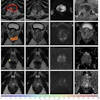


![Overview of the study design. (A) The fully automated deep learning framework was developed to estimate body composition (BC) (defined as subcutaneous adipose tissue [SAT] in liters; visceral adipose tissue [VAT] in liters; skeletal muscle [SM] in liters; SM fat fraction [SMFF] as a percentage; and intramuscular adipose tissue [IMAT] in deciliters) from MRI. The fully automated framework comprised one model (model 1) to quantify different BC measures (SAT, VAT, SM, SMFF, and IMAT) as three-dimensional (3D) measures from whole-body MRI scans. The second model (model 2) was trained to identify standardized anatomic landmarks along the craniocaudal body axis (z coordinate field), which allowed for subdividing the whole-body measures into different subregions typically examined on clinical routine MRI scans (chest, abdomen, and pelvis). (B) BC was quantified from whole-body MRI in over 66,000 individuals from two large population-based cohort studies, the UK Biobank (UKB) (36,317 individuals) and the German National Cohort (NAKO) (30,291 individuals). Bar graphs show age distribution by sex and cohort. BMI = body mass index. (C) After the performance assessment of the fully automated framework, the change in BC measures, distributions, and profiles across age decades were investigated. Age-, sex-, and height-adjusted body composition reference curves were calculated and made publicly available in a web-based z-score calculator (https://circ-ml.github.io).](https://img.auntminnieeurope.com/mindful/smg/workspaces/default/uploads/2026/05/body-comp.XgAjTfPj1W.jpg?auto=format%2Ccompress&fit=crop&h=100&q=70&w=100)


![Overview of the study design. (A) The fully automated deep learning framework was developed to estimate body composition (BC) (defined as subcutaneous adipose tissue [SAT] in liters; visceral adipose tissue [VAT] in liters; skeletal muscle [SM] in liters; SM fat fraction [SMFF] as a percentage; and intramuscular adipose tissue [IMAT] in deciliters) from MRI. The fully automated framework comprised one model (model 1) to quantify different BC measures (SAT, VAT, SM, SMFF, and IMAT) as three-dimensional (3D) measures from whole-body MRI scans. The second model (model 2) was trained to identify standardized anatomic landmarks along the craniocaudal body axis (z coordinate field), which allowed for subdividing the whole-body measures into different subregions typically examined on clinical routine MRI scans (chest, abdomen, and pelvis). (B) BC was quantified from whole-body MRI in over 66,000 individuals from two large population-based cohort studies, the UK Biobank (UKB) (36,317 individuals) and the German National Cohort (NAKO) (30,291 individuals). Bar graphs show age distribution by sex and cohort. BMI = body mass index. (C) After the performance assessment of the fully automated framework, the change in BC measures, distributions, and profiles across age decades were investigated. Age-, sex-, and height-adjusted body composition reference curves were calculated and made publicly available in a web-based z-score calculator (https://circ-ml.github.io).](https://img.auntminnieeurope.com/mindful/smg/workspaces/default/uploads/2026/05/body-comp.XgAjTfPj1W.jpg?auto=format%2Ccompress&fit=crop&h=112&q=70&w=112)