Three pioneering neuroradiologists—Hans Henkes, René Chapot, and Ajay Wakhloo—discussed their groundbreaking inventions in stroke and aneurysm treatment at neuroRAD 2026, emphasizing that true success extends beyond technical innovation to include honest patient communication, careful risk assessment, and clinical responsibility when complications occur.
- Three major innovations: Solitaire stent for mechanical thrombectomy, Pressure Cooker technique for controlled embolic delivery, and Surpass flow diverter for aneurysm treatment.
- Complications reshape decisions: Experienced physicians reconsider interventions based on learned risks and may decline procedures they would have performed earlier in their careers.
- Patient-centered responsibility: Physicians must discuss risks before procedures, communicate honestly about adverse outcomes, and remain available for follow-up care.
- Clinical specialty focus: Neurointerventionalists should see patients before and after procedures, take responsibility for outcomes, and avoid becoming procedure-focused rather than patient-focused.
- Next generation guidance: Young neuroradiologists should understand their strengths and limitations, pursue genuine interests, and prioritize clinical patient care over technical achievement.
Mainz -- Stent retrievers, flow diverters, and the Pressure Cooker technique have changed how physicians treat strokes, aneurysms, and vascular malformations. At neuroRAD 2026 in Mainz, three pioneers behind these developments took the stage to discuss not only their inventions but also complications, clinical judgment, and the patients undergoing these procedures.
 neurorad2026CT
The session “Standing on the Shoulders of Giants” brought together Dr. Hans Henkes of Klinikum Stuttgart in Stuttgart, Germany; Dr. René Chapot of Alfried Krupp Krankenhaus in Essen, Germany; and Dr. Ajay K. Wakhloo, PhD, of Tufts University School of Medicine in Boston, United States, at the annual congress of the German Society of Neuroradiology (DGNR).
From flow diversion to mechanical thrombectomy
Henkes co-invented the Solitaire stent, originally developed for aneurysm treatment and later used for mechanical thrombectomy. Chapot contributed to early thrombectomy techniques and helped develop the Pressure Cooker technique, which enables more controlled delivery of liquid embolic agents during treatment of vascular malformations. Wakhloo pioneered early concepts of flow diversion and contributed to the development of the Surpass flow diverter.
The three also recalled mentors who encouraged them to experiment and discussed the role of industry in turning clinical ideas into medical devices. Henkes stressed the importance of transparency in relationships between physicians and manufacturers, particularly when financial interests are involved.
When complications change clinical decisions
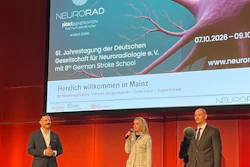
 From left: Prof. Dr. Hans Henkes, Prof. Dr. Ajay K. Wakhloo, and Prof. Dr. René Chapot during the “Standing on the Shoulders of Giants” session at neuroRAD 2026 in Mainz, Germany.neurorad2026
He also emphasized the importance of speaking honestly with patients and their families when complications occur. “I did my best. We all agreed that this needed to be treated, and we take responsibility,” Wakhloo said, describing what physicians should be able to tell families following an adverse outcome.
Henkes addressed both sides of that responsibility: ensuring that patients understand the risks before an intervention and remaining available afterward, particularly when something goes wrong. “Patients and their families have a right to speak with the doctor,” he said.
The panelists also stressed the importance of discussing complications with experienced colleagues and learning from difficult cases rather than avoiding them.
The patient is the hero, not the physician
The three pioneers also had advice for the next generation of neuroradiologists. Henkes encouraged young physicians to recognize their strengths and limitations, while Wakhloo advised them to discover what genuinely interests them, whether clinical intervention, research, invention, or another aspect of medicine.
Chapot stressed that neurointervention must remain a clinical specialty. Physicians should see patients before procedures, remain involved in their care afterward, and take responsibility for follow-up.
A session intended to celebrate decades of technical innovation ultimately returned to the patients behind the procedures and the responsibility that comes with every intervention.