Local treatment of lung tumours should be tailored to individual patients by combining the strengths of stereotactic body radiotherapy (SBRT), percutaneous ablation, and CT-guided brachytherapy, with patient selection and multidisciplinary decision-making guiding the choice of approach.
- SBRT effectiveness: Achieves approximately 90% three-year local control for T1 tumours and is well-tolerated in frail patients with low lung function.
- Ablation advantages: Percutaneous ablation preserves lung tissue, allows repeat treatment, provides same-session biopsy samples, and works best for small peripheral tumours measuring 2 cm or less.
- Treatment selection: Radiofrequency ablation (RFA), microwave ablation, and cryoablation should be chosen based on tumour anatomy, achievable margins, and operator experience.
- Oligometastatic disease: Requires multidisciplinary planning to control resistant sites and prolong systemic treatment benefits.
- Recurrence management: CT-guided high-dose-rate brachytherapy offers potential for central, larger, or geometrically complex lesions when thermal ablation is difficult.
Local treatment of lung tumours should combine the strengths of radiotherapy, percutaneous ablation and brachytherapy, with patient selection guiding the approach, speakers concluded at CIRSE 2026 in Copenhagen. The congress, which has run for more than 40 years, takes place from September 5 to 9.
The controversy session, “Local cure for lung tumours,” made the case for combining the strengths of stereotactic body radiotherapy (SBRT), needle-based thermal ablation and CT-guided brachytherapy.
Speakers stressed ablation’s ability to preserve lung tissue, allow repeat treatment and provide biopsy samples, while calling for tailored multidisciplinary decisions for oligometastatic disease and recurrence after SBRT.
Matching treatment to the patient
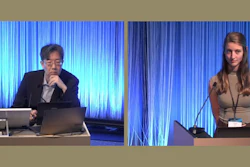
“SBRT is tolerated by the frail patient with low lung function,” said Prof. Gitte Persson, a clinical professor at the University of Copenhagen who works at Herlev and Gentofte Hospital.
Persson presented SBRT as the established non-surgical treatment for medically inoperable early-stage non-small cell lung cancer (NSCLC), while surgery remains standard for operable patients. She reported approximately 90% three-year local control for T1 tumours. Outcomes depend on tumour size, location and achievable radiation dose, with central lesions posing particular challenges.
For patients with limited lung reserve, percutaneous ablation offers another route to local control.
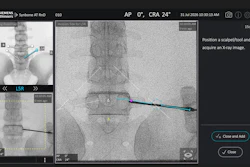
 Clinical cases presented by Dr. Publio Viana show the role of lung ablation in patients with pulmonary fibrosis, during same-session biopsy and treatment, and after SBRT recurrence.Slide from his CIRSE 2026 presentation, “Early-stage NSCLC: percutaneous ablation.”
“Patient selection is critical,” said Dr. Publio Viana, an interventional radiologist at InRad–HC–FMUSP and Hospital Sírio-Libanês in São Paulo, Brazil.
Viana highlighted small peripheral tumours, particularly those measuring 2 cm or less. Advantages include same-session biopsy, lung-tissue preservation and repeat treatment without additional therapeutic radiation.
Radiofrequency ablation (RFA), microwave ablation and cryoablation should be selected according to anatomy, achievable margins and operator experience. Observational comparisons with SBRT do not establish equivalence.
Preserving options in oligometastatic disease
Oligometastatic disease demands broader planning. Local treatment may control resistant sites and prolong systemic-treatment benefit, Persson explained. “It’s a multidisciplinary effort,” she said.
For lung metastases, adequate tumour coverage and ablation margins are central to success, emphasised Prof. Jean-Yves Gaubert of Timone University Hospital in Marseille, France.
Gaubert discussed RFA for small lesions and favoured cryoablation for selected challenging locations. Protective techniques such as hydrodissection can separate vulnerable structures from the treatment zone, while follow-up enables early retreatment. “There’s no place for competition between local therapies,” he said.
Treating recurrence after SBRT
Recurrence after SBRT expands the discussion to CT-guided high-dose-rate brachytherapy. Prof. Robert D. Suh of UCLA’s David Geffen School of Medicine in Los Angeles highlighted its potential for central, larger or geometrically complex lesions when thermal ablation is difficult.
Treatment delivers radiation from within the tumour and can often be completed in one session, although evidence specifically following SBRT failure remains limited. “It’s a coordinated team effort,” Suh said.
Early detection also shapes salvage ablation, stressed Dr. Jean Palussière, an interventional radiologist at Institut Bergonié in Bordeaux, France. Smaller recurrences allow more limited treatment volumes, while tissue sampling can distinguish recurrence from another primary tumour or identify resistance mutations. “We can biopsy and treat in the same session,” he said.