Dear AuntMinnieEurope Member,
Based on the report in the Turkish media about last month's MRI accident in Izmit, the outcome could have been a lot worse. The patient who was lying on the metal stretcher that reportedly got stuck to the scanner could easily have died.
There's talk of an investigation into the incident. We plan to bring you an update as soon as we can.
This week's second most popular article is about the death of a 33-year-old woman who had swallowed her dental plate. Since this report went live on Tuesday, two readers have posted their comments below the final paragraph of text, and they're well worth reading.
Awareness of CT radiomics seems to be rising fast, as reflected by the number of publications and congress sessions on this topic. In a new study posted by the European Journal of Radiology, the authors showed how radiomics features extracted from CT images of the perithrombus region of the brain improve the prediction of intracranial hemorrhage after endovascular thrombectomy.
In another important article with great clinical images, a German team has found that using photon-counting CT for abdominal imaging to diagnose kidney stones reduces patients' radiation exposure by 44% compared with conventional CT.
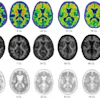
Finally, we have news of a PET/MRI study from Belgium that provides insights into the neurobiology of late-life depression.
Philip Ward
Editor in Chief
AuntMinnieEurope.com





![Overview of the study design. (A) The fully automated deep learning framework was developed to estimate body composition (BC) (defined as subcutaneous adipose tissue [SAT] in liters; visceral adipose tissue [VAT] in liters; skeletal muscle [SM] in liters; SM fat fraction [SMFF] as a percentage; and intramuscular adipose tissue [IMAT] in deciliters) from MRI. The fully automated framework comprised one model (model 1) to quantify different BC measures (SAT, VAT, SM, SMFF, and IMAT) as three-dimensional (3D) measures from whole-body MRI scans. The second model (model 2) was trained to identify standardized anatomic landmarks along the craniocaudal body axis (z coordinate field), which allowed for subdividing the whole-body measures into different subregions typically examined on clinical routine MRI scans (chest, abdomen, and pelvis). (B) BC was quantified from whole-body MRI in over 66,000 individuals from two large population-based cohort studies, the UK Biobank (UKB) (36,317 individuals) and the German National Cohort (NAKO) (30,291 individuals). Bar graphs show age distribution by sex and cohort. BMI = body mass index. (C) After the performance assessment of the fully automated framework, the change in BC measures, distributions, and profiles across age decades were investigated. Age-, sex-, and height-adjusted body composition reference curves were calculated and made publicly available in a web-based z-score calculator (https://circ-ml.github.io).](https://img.auntminnieeurope.com/mindful/smg/workspaces/default/uploads/2026/05/body-comp.XgAjTfPj1W.jpg?auto=format%2Ccompress&fit=crop&h=112&q=70&w=112)


