Radiotherapy professionals appear open to upright radiotherapy (RT) but are skeptical about its chances of becoming a new standard, according to a recent survey.
Among 307 respondents from 32 countries across five continents, a majority said they would be willing to use upright radiotherapy despite being largely unfamiliar with it, and 42% believed it could become a standard treatment option within five to ten years.
“RT has evolved through successive technological shifts in the past decades. [Upright] RT may represent the next step,” wrote lead author Sophie Boisbouvier, PhD, of the Léon Bérard Center in Lyon, France, and colleagues. The survey was published May 2 in Technical Innovations & Patient Support in Radiation Oncology.
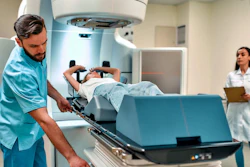
Conventional radiotherapy is delivered with patients lying supine or prone, with a rotating gantry directing beams from multiple angles. Conversely, upright radiotherapy uses a fixed beam with the patient in a sitting, semi-sitting, or standing position on a rotating positioning system.
The technique has attracted growing interest, as eliminating the gantry can substantially reduce room size, infrastructure costs, and shielding requirements, the researchers noted. Multiple commercial upright systems have entered the market in recent years, they explained, and in this study they aimed to assess where the field stands on implementation.
The researchers developed and distributed a survey between September and December 2025. It comprised up to 20 questions and 59 items organized across four sections covering upright RT (upRT) availability, acceptability, patient populations, and respondent demographics. A total of 307 analyzable responses were collected from 32 countries across five continents, with full completion by 184 respondents.
Key findings included the following:
44 respondents (14%) had access to upRT at their institution, with 25 using it for treatment and 17 for research.
Among 263 without access, 73% were not familiar with upRT, yet 81% said they would be willing to use it if available.
Just 42% believed upRT could become a standard treatment option within five to ten years, with European professionals significantly more skeptical than those elsewhere (p < 0.01).
The leading perceived benefit was psychological patient comfort (77%), followed by physical comfort (73%) and reduced treatment room size (56%).
The top barriers to implementation were complexity of multimodality imaging (69%) for planning procedures, difficulty integrating upRT into existing infrastructure (65%), and staff training requirements once implemented (82%).
The study provides the first results on the acceptability of upRT among RT professionals, the researchers noted.
“Despite skepticism regarding the likelihood that upRT will replace supine treatments in the coming years, RT professionals expressed willingness to test upRT,” they wrote.
The findings highlight the need to collect further data to define the clinical added value of upRT and support its wider implementation, the group concluded.
The full study is available here