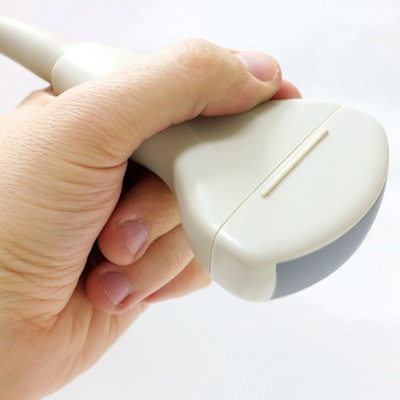
Ultrasound academies can help to improve sonographer recruitment and retention, through organized programs like apprenticeships, according to the U.K. Society of Radiographers (SoR).
The academies have a role to play in easing the pressure on clinical departments, specifically during early training stages, noted Gill Harrison, SoR's professional officer, in an update issued on 4 October. The next generation of sonographers -- as well as existing sonographers -- need support to develop their skills and competencies to provide extended services and feedback into research, leadership, and education, she said.
"Everyone has a role to play in supporting the next generation of sonographers but also in supporting existing sonographers to develop their skills and competencies to provide extended services and input into research, leadership, and education, should they choose to," she wrote.
In England, apprenticeships for advanced clinical practice can be used to support this development and the newly published preceptorship and capability development framework for sonographers, she pointed out.
Some of the devolved UK nations are also looking at placement capacity expansion initiatives and ideas to improve sonographer recruitment and retention, according to Harrison. In time, the academies should assist by taking some of the pressure off clinical departments, particularly in the early stages of training.







![Overview of the study design. (A) The fully automated deep learning framework was developed to estimate body composition (BC) (defined as subcutaneous adipose tissue [SAT] in liters; visceral adipose tissue [VAT] in liters; skeletal muscle [SM] in liters; SM fat fraction [SMFF] as a percentage; and intramuscular adipose tissue [IMAT] in deciliters) from MRI. The fully automated framework comprised one model (model 1) to quantify different BC measures (SAT, VAT, SM, SMFF, and IMAT) as three-dimensional (3D) measures from whole-body MRI scans. The second model (model 2) was trained to identify standardized anatomic landmarks along the craniocaudal body axis (z coordinate field), which allowed for subdividing the whole-body measures into different subregions typically examined on clinical routine MRI scans (chest, abdomen, and pelvis). (B) BC was quantified from whole-body MRI in over 66,000 individuals from two large population-based cohort studies, the UK Biobank (UKB) (36,317 individuals) and the German National Cohort (NAKO) (30,291 individuals). Bar graphs show age distribution by sex and cohort. BMI = body mass index. (C) After the performance assessment of the fully automated framework, the change in BC measures, distributions, and profiles across age decades were investigated. Age-, sex-, and height-adjusted body composition reference curves were calculated and made publicly available in a web-based z-score calculator (https://circ-ml.github.io).](https://img.auntminnieeurope.com/mindful/smg/workspaces/default/uploads/2026/05/body-comp.XgAjTfPj1W.jpg?auto=format%2Ccompress&fit=crop&h=112&q=70&w=112)


