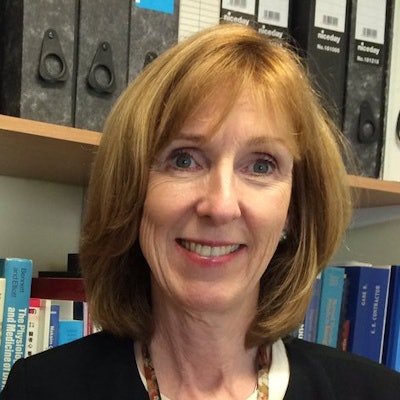
Prof. Fiona Gilbert, president of the European Society of Breast Imaging (EUSOBI), has provided detailed information about the society’s upcoming annual scientific meeting, which will take place in Malmö, Sweden, from 29 September to 1 October.
The society is prepared for high in-person attendance at the meeting, but it is also planning to broadcast its main program live to reach those who cannot travel to Malmö.
Gilbert in a letter said EUSOBI 2022 will cover a variety of topics in breast imaging, including updates in screening, contrast-enhanced mammography, diffusion-weighted imaging in MRI, artificial intelligence, and imaging in treating breast cancer, among others.
Two keynote speakers will also give presentations. Dr. Regina Beets-Tan will talk about the future of cancer imaging, while Dr. Therese Sørlie will discuss the intrinsic molecular subtypes in breast cancer. Gilbert also said the society will meet with Japanese radiologists to extend bonds with other societies around the world.
The EUSOBI Young Club Symposium will again be organized on 29 September, where young radiologists can interact with experts on professional issues.





![Overview of the study design. (A) The fully automated deep learning framework was developed to estimate body composition (BC) (defined as subcutaneous adipose tissue [SAT] in liters; visceral adipose tissue [VAT] in liters; skeletal muscle [SM] in liters; SM fat fraction [SMFF] as a percentage; and intramuscular adipose tissue [IMAT] in deciliters) from MRI. The fully automated framework comprised one model (model 1) to quantify different BC measures (SAT, VAT, SM, SMFF, and IMAT) as three-dimensional (3D) measures from whole-body MRI scans. The second model (model 2) was trained to identify standardized anatomic landmarks along the craniocaudal body axis (z coordinate field), which allowed for subdividing the whole-body measures into different subregions typically examined on clinical routine MRI scans (chest, abdomen, and pelvis). (B) BC was quantified from whole-body MRI in over 66,000 individuals from two large population-based cohort studies, the UK Biobank (UKB) (36,317 individuals) and the German National Cohort (NAKO) (30,291 individuals). Bar graphs show age distribution by sex and cohort. BMI = body mass index. (C) After the performance assessment of the fully automated framework, the change in BC measures, distributions, and profiles across age decades were investigated. Age-, sex-, and height-adjusted body composition reference curves were calculated and made publicly available in a web-based z-score calculator (https://circ-ml.github.io).](https://img.auntminnieeurope.com/mindful/smg/workspaces/default/uploads/2026/05/body-comp.XgAjTfPj1W.jpg?auto=format%2Ccompress&fit=crop&h=112&q=70&w=112)


