Dear AuntMinnieEurope Member,
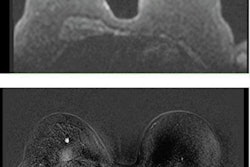
MR mammography can be a viable alternative to x-ray-based mammography screening in high-risk women, according to a new study by German researchers that we're highlighting this week.
While MRI's clinical value is unmatched, the modality often suffers from the perception that it's too expensive for screening use. Therefore, it's interesting that the new study also focused on cost-effectiveness, finding that under some scenarios, MR mammography compares favorably with other screening modalities.
While you're in our MRI Community, be sure to check out a new offering from the Maverinck, Dr. Peter Rinck, who revisits the old debate over field strength in MRI. It was thought that this debate was settled long ago in favor of high-field MRI, but new low-field technologies are starting to revive the discussion.
In other news, researchers from Spain are reporting fascinating new results from the Progression of Early Subclinical Atherosclerosis (PESA) project, a longitudinal study of cardiovascular risk factors among 4,000 employees at a major Spanish bank.
Investigators decided to build on previous research pointing to a link between cardiovascular risk factors and Alzheimer's disease in the elderly, but in their new study, they focused instead on middle-aged individuals in a subgroup drawn from the PESA cohort. They found that PET scans indicated subtle changes in brain metabolism that were linked to the risk factors -- possibly a precursor to Alzheimer's disease.
From the U.K. come exciting preliminary results from an ongoing trial of CT lung cancer screening. Researchers found that low-dose CT exams could detect 70% of lung cancers at stage I or II -- highlighting the potential of lung screening to detect cancer while it's still treatable.
Another story in our CT Community comes from France, where nephrology societies and the national radiology society (SFR) have published guidelines on the safe use of contrast media. Get the rest of the details in our CT Community.