Dear AuntMinnieEurope Member,
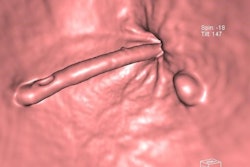
CT colonography, or virtual colonoscopy, is a well-established and fast-growing examination, but wide variations in technique persist between hospitals and countries. This is of concern because the procedure is not risk-free.
Detailed new standards now exist. The good news is they're practical, expertly written, and easy to follow, and they can be downloaded free of charge. Find out more in the CT Community.
Known simply as the NKI, Amsterdam's Netherlands Cancer Institute has a distinguished history dating back to 1913, and its 750-plus scientists and scientific support staff members conduct cutting-edge fundamental, translational, and clinical research. A group from the NKI gave a novel presentation at last week's International Association for the Study of Lung Cancer world conference. Don't miss our report on the topic.
In other news, researchers have shined a light on life in Medieval England. They made some grim discoveries when they studied the bones of more than 300 people found at three very different burial sites.
The use of artificial intelligence in breast imaging continues to generate considerable interest. A new study conducted partly at Karolinska University Hospital in Stockholm found that an algorithm called Mirai can outperform other risk-assessment models for predicting future risk of breast cancer from a mammogram, potentially enabling earlier identification of high-risk women. Read more in the Women's Imaging Community.
Last but not least, we have an article about the annual elections of the European Society of Radiology (ESR). Many medical societies or associations reveal little or nothing about how they appoint senior officials, so ESR deserves praise for its efforts to be transparent and democratic. Hopefully they can now build on what's been achieved and give the vote to more of the 88,000 members who were not eligible to take part in the 2021 ballot.