A consultant radiologist in Northern Ireland who secretly recorded work colleagues, strangers, and family friends using the toilet was sentenced on 15 December to nine months in jail, according to a news report posted by the Belfast Telegraph.
Judge Patrick Lynch QC also ordered Dr. Mark McClure, 52, to sign the police sex offenders register for 10 years. He recorded people at Craigavon Area Hospital.
In November 2020, the radiologist, who lives in Bangor, entered guilty pleas to 11 counts of voyeurism between 9 July 2014 and 23 December 2014. The charges related to offences committed in the radiography department and medical education center at Craigavon Area Hospital and a bathroom in McClure's marital home. After his offences were uncovered by suspicious staff, police seized his phone, a computer, and a memory stick, the Belfast Telegraph stated.
This is the second time that McClure was found guilty of voyeurism, according to the report. In February 2017, he was handed a nine-month probation order for trying to record women using the toilets in Hillsborough Private Clinic.
A spokesperson for the General Medical Council (GMC) said: "Following an Interim Orders Panel at the Medical Practitioners Tribunal Service, consultant radiologist McClure was allowed to continue to practise while the GMC carried out its investigation but with restrictions such as not being allowed to deal personally with patients."


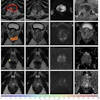







![Overview of the study design. (A) The fully automated deep learning framework was developed to estimate body composition (BC) (defined as subcutaneous adipose tissue [SAT] in liters; visceral adipose tissue [VAT] in liters; skeletal muscle [SM] in liters; SM fat fraction [SMFF] as a percentage; and intramuscular adipose tissue [IMAT] in deciliters) from MRI. The fully automated framework comprised one model (model 1) to quantify different BC measures (SAT, VAT, SM, SMFF, and IMAT) as three-dimensional (3D) measures from whole-body MRI scans. The second model (model 2) was trained to identify standardized anatomic landmarks along the craniocaudal body axis (z coordinate field), which allowed for subdividing the whole-body measures into different subregions typically examined on clinical routine MRI scans (chest, abdomen, and pelvis). (B) BC was quantified from whole-body MRI in over 66,000 individuals from two large population-based cohort studies, the UK Biobank (UKB) (36,317 individuals) and the German National Cohort (NAKO) (30,291 individuals). Bar graphs show age distribution by sex and cohort. BMI = body mass index. (C) After the performance assessment of the fully automated framework, the change in BC measures, distributions, and profiles across age decades were investigated. Age-, sex-, and height-adjusted body composition reference curves were calculated and made publicly available in a web-based z-score calculator (https://circ-ml.github.io).](https://img.auntminnieeurope.com/mindful/smg/workspaces/default/uploads/2026/05/body-comp.XgAjTfPj1W.jpg?auto=format%2Ccompress&fit=crop&h=112&q=70&w=112)


