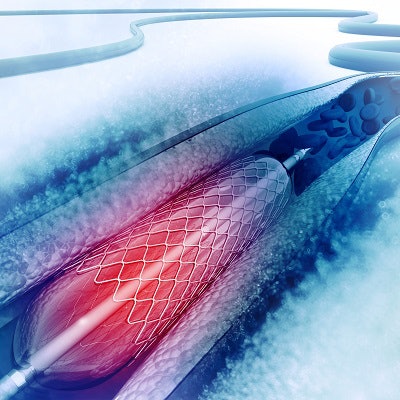
The Royal College of Radiologists (RCR) and the British Society of Interventional Radiology (BSIR) are calling for a U.K. clinical registry of ureteric stents.
The appeal comes after release on 22 October of a report by the Healthcare Safety Investigation Branch (HSIB) that investigated delayed removal of the stents. The document was prompted by a patient who was fitted with a stent following kidney stone surgery; the stent's removal was delayed, which caused the patient to experience urinary infections.
The HSIB recommends that national U.K. standards for electronic logging of stents be established.
"The RCR and BSIR welcome the report and agree with its findings, but we also argue that stent monitoring could be further centralized and given clear clinical incentives," the two organizations said in a statement, also released 22 October.








![Overview of the study design. (A) The fully automated deep learning framework was developed to estimate body composition (BC) (defined as subcutaneous adipose tissue [SAT] in liters; visceral adipose tissue [VAT] in liters; skeletal muscle [SM] in liters; SM fat fraction [SMFF] as a percentage; and intramuscular adipose tissue [IMAT] in deciliters) from MRI. The fully automated framework comprised one model (model 1) to quantify different BC measures (SAT, VAT, SM, SMFF, and IMAT) as three-dimensional (3D) measures from whole-body MRI scans. The second model (model 2) was trained to identify standardized anatomic landmarks along the craniocaudal body axis (z coordinate field), which allowed for subdividing the whole-body measures into different subregions typically examined on clinical routine MRI scans (chest, abdomen, and pelvis). (B) BC was quantified from whole-body MRI in over 66,000 individuals from two large population-based cohort studies, the UK Biobank (UKB) (36,317 individuals) and the German National Cohort (NAKO) (30,291 individuals). Bar graphs show age distribution by sex and cohort. BMI = body mass index. (C) After the performance assessment of the fully automated framework, the change in BC measures, distributions, and profiles across age decades were investigated. Age-, sex-, and height-adjusted body composition reference curves were calculated and made publicly available in a web-based z-score calculator (https://circ-ml.github.io).](https://img.auntminnieeurope.com/mindful/smg/workspaces/default/uploads/2026/05/body-comp.XgAjTfPj1W.jpg?auto=format%2Ccompress&fit=crop&h=112&q=70&w=112)


