Concerned about falling behind in today's highly competitive environment, the Berlin-based Alliance of Young Doctors is calling for an improvement in research conditions, according to the German Radiology Society (DRG).
Today, researchers and clinicians face significant handicaps in finding and performing research work. Having spent the necessary time to pursue advanced degrees, researchers find themselves underappreciated, underutilized, and burdened with bureaucracy, with little spare time for research after completing their clinical work. This is causing strains in the work-life balance, the alliance said in a statement.
The strain is causing many would-be researchers to forego academic careers while searching for alternative positions overseas, and the result is a growing shortage of qualified and scientifically active physicians within Germany, the group reported.
Emphasizing the importance of high-quality medical research, the alliance is calling for expanding the resources available to young researchers.





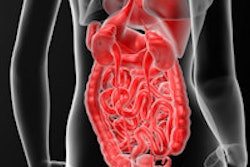


![Overview of the study design. (A) The fully automated deep learning framework was developed to estimate body composition (BC) (defined as subcutaneous adipose tissue [SAT] in liters; visceral adipose tissue [VAT] in liters; skeletal muscle [SM] in liters; SM fat fraction [SMFF] as a percentage; and intramuscular adipose tissue [IMAT] in deciliters) from MRI. The fully automated framework comprised one model (model 1) to quantify different BC measures (SAT, VAT, SM, SMFF, and IMAT) as three-dimensional (3D) measures from whole-body MRI scans. The second model (model 2) was trained to identify standardized anatomic landmarks along the craniocaudal body axis (z coordinate field), which allowed for subdividing the whole-body measures into different subregions typically examined on clinical routine MRI scans (chest, abdomen, and pelvis). (B) BC was quantified from whole-body MRI in over 66,000 individuals from two large population-based cohort studies, the UK Biobank (UKB) (36,317 individuals) and the German National Cohort (NAKO) (30,291 individuals). Bar graphs show age distribution by sex and cohort. BMI = body mass index. (C) After the performance assessment of the fully automated framework, the change in BC measures, distributions, and profiles across age decades were investigated. Age-, sex-, and height-adjusted body composition reference curves were calculated and made publicly available in a web-based z-score calculator (https://circ-ml.github.io).](https://img.auntminnieeurope.com/mindful/smg/workspaces/default/uploads/2026/05/body-comp.XgAjTfPj1W.jpg?auto=format%2Ccompress&fit=crop&h=112&q=70&w=112)


