Attendance at the RSNA 2013 conference in Chicago was basically flat compared with the year before, according to preliminary figures released by the Oak Brook, Illinois, U.S., society.
By Thursday, December 5, RSNA was reporting total attendance of 53,169, essentially unchanged compared with Thursday attendance of 52,973 at the 2012 edition of the meeting. The 2012 meeting itself saw attendance decline 9% compared to 2011.
Professional attendance at RSNA 2013 grew 1% compared with 2012, to 26,572 attendees from 26,266 professionals at the 2012 meeting, according to preliminary numbers for both years. The number of attendees in the "guest/other" category declined 2%, to 5,279 in 2013 compared with 5,413 at the same point in 2012.
The number of exhibitor attendees essentially stayed the same this year, at 21,318 attendees, compared with 21,294 exhibitor attendees in 2012.


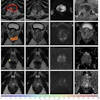







![Overview of the study design. (A) The fully automated deep learning framework was developed to estimate body composition (BC) (defined as subcutaneous adipose tissue [SAT] in liters; visceral adipose tissue [VAT] in liters; skeletal muscle [SM] in liters; SM fat fraction [SMFF] as a percentage; and intramuscular adipose tissue [IMAT] in deciliters) from MRI. The fully automated framework comprised one model (model 1) to quantify different BC measures (SAT, VAT, SM, SMFF, and IMAT) as three-dimensional (3D) measures from whole-body MRI scans. The second model (model 2) was trained to identify standardized anatomic landmarks along the craniocaudal body axis (z coordinate field), which allowed for subdividing the whole-body measures into different subregions typically examined on clinical routine MRI scans (chest, abdomen, and pelvis). (B) BC was quantified from whole-body MRI in over 66,000 individuals from two large population-based cohort studies, the UK Biobank (UKB) (36,317 individuals) and the German National Cohort (NAKO) (30,291 individuals). Bar graphs show age distribution by sex and cohort. BMI = body mass index. (C) After the performance assessment of the fully automated framework, the change in BC measures, distributions, and profiles across age decades were investigated. Age-, sex-, and height-adjusted body composition reference curves were calculated and made publicly available in a web-based z-score calculator (https://circ-ml.github.io).](https://img.auntminnieeurope.com/mindful/smg/workspaces/default/uploads/2026/05/body-comp.XgAjTfPj1W.jpg?auto=format%2Ccompress&fit=crop&h=112&q=70&w=112)


