Leipzig -- The MASAI trial delivered the "holy grail" of screening data: noninferiority in interval breast cancer rates with a massive workload reduction. Published in the Lancet in January 2026, the full results showed 29% more cancers detected, 44% less reading workload, and crucially, 12% fewer interval cancers.
But in Germany, AI mammography still has no clear reimbursement route in routine care, and according to Prof. Mathias Goyen, that's not about evidence anymore.
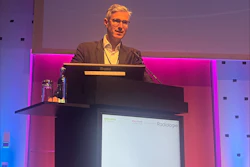
 Professor Mathias Goyen (GE HealthCare) at RöKo 2026 on why Europe's cautious approach to AI reimbursement might be testing what actually works across fragmented healthcare systems.Photo courtesy Mathias Goyen
Reimbursement built for devices, not algorithms
The MASAI trial is clinically compelling. Fewer interval cancers, higher detection rates, reduced workload in a system facing workforce shortages. But German reimbursement systems, Goyen argued, were built for a different kind of innovation.
"They were designed for a world in which innovation meant a new device or a new drug, not continuously learning software integrated into workflows," he said.
The timing makes the gap even sharper. While the Federal Joint Committee (G-BA) recently greenlit reimbursement for AI-driven lung cancer screening (effective April 2026), mammography, the gold standard of population screening, remains in a reimbursement no-man's-land.
LDCT requires AI for volumetric nodule assessment, yet AI mammography is stuck in evaluation mode despite stronger evidence.
Radiologists who use AI will replace those who don't
Goyen, who is a well-known figure in social media, has written publicly that AI will replace clinicians who refuse to change what being a clinician means. At RöKo, he clarified what that looks like in practice.
"I do not believe AI per se will replace radiologists," he said. "But I absolutely believe radiologists who work differently with AI will replace radiologists who refuse to adapt."
And that shift is already visible in 2026, he said. AI increasingly handles repetitive detection tasks, prioritization, workflow optimization, and quantitative analysis. That pushes the radiologist's role upward, toward synthesis, judgment under uncertainty, multidisciplinary collaboration, and guiding complex patient pathways.
"The danger is not automation itself," Goyen said. "The danger is defining radiology too narrowly, as if our job were simply to identify findings on images. If that is how someone defines radiology, then yes, parts of that role will absolutely become automated."
But if radiologists redefine themselves as diagnostic orchestrators and clinical integrators within data-rich healthcare systems, he noted, moving from the dark room to the front line of the multidisciplinary team, AI expands the strategic importance of the specialty rather than diminishing it.
Photon-counting CT: When is the evidence enough?
Photon-counting CT is generating excitement at RöKo 2026, but the evidence base is still building. Here, Goyen pushed back on the idea that hospitals should wait for perfect data before investing.
"If we waited for perfect evidence before every major imaging innovation, many technologies we now consider standard would have arrived years later," he said.
For Goyen, the key isn't whether photon-counting CT produces prettier images, but whether it changes clinical confidence, workflow efficiency, dose performance, or patient management in meaningful ways.
Different hospitals will apply different thresholds. Large academic centers may invest earlier because part of their mission is innovation and evidence generation. Smaller hospitals may reasonably wait for more mature health-economic data.
"But what is important is that hospitals avoid two extremes," Goyen said. "Adopting technology simply because it is exciting, or rejecting innovation simply because the evidence is still evolving."
When excessive caution can become paralysis
As of early 2026, the U.S. Food and Drug Administration (FDA) has authorized approximately 1,450 AI medical products, with around 76% in radiology. Europe has roughly 200–300 CE-marked AI tools, depending on the database. Goyen sees this gap as a commercial risk, not necessarily a clinical one.
"The United States has created a much faster environment for innovation, commercialization, scaling, and reimbursement," he said. "Europe, by contrast, tends to move more cautiously, with stronger emphasis on validation, governance, privacy, and how systems actually work in practice."
The danger, Goyen warned, is that excessive caution can become paralysis. If innovation takes too long to reach clinical practice, patients lose access to meaningful advances.
"Europe as stress test for healthcare innovation"
But there's another side to the story: European healthcare systems are extraordinarily complex, fragmented, and heterogeneous. If an AI solution succeeds across Europe, across different workflows, reimbursement systems, languages, and clinical cultures, it's often very robust.
"Europe may actually function as a kind of stress test for healthcare innovation," Goyen said. "The real challenge is finding the balance between speed and responsibility."
Pure acceleration without governance creates noise and fragmentation. But regulation without implementation creates irrelevance. And right now, Europe is searching for its North Star between the EU AI Act's guardrails and the clinical urgency of 2026.
Unsere vollständige Berichterstattung vom RöKo 2026 finden Sie hier.