You are lying flat, staring at the ceiling. To your right is the examination room. When you turn to your left, a clinician types into his computer. Equipment clicks and beeps in the background. While you can hear various sounds of the hospital, the thoughts in your head are louder.
"Did I go to the toilet in time? How long will this take? What if something goes wrong? Will they explain everything to me?"
Just minutes earlier, you were sitting on a bench, waiting to be prepared for the examination. The worries had already begun. Now the room darkens as the examination table slides into the PET/CT scanner. And the questions become more urgent.
"Do they know I'm here? Can they hear me? What if I need help? Will someone come if I press the button?"
Minutes pass. Eventually, you are back on the bench. The examination is over. Except that none of it was real.
This is the experience created by STOPscanxiety, an initiative presented at the European Association of Nuclear Medicine (EANM) congress in Vienna in October 2026.
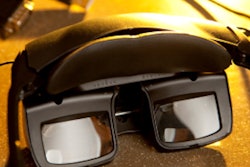
Visitors to the STOPscanxiety booth could put on virtual reality (VR) headsets and experience an eight-minute, 360-degree mini-documentary following a patient through a PET/CT examination.
The immersive format allows viewers to look around the clinical environment while listening to an internal monologue drawn from the experiences of healthcare professionals who had themselves become patients and undergone repeated medical imaging. What clinicians may regard as a series of routine steps becomes an unsettling experience shaped by unfamiliar sounds, isolation, and unanswered questions.
Anxiety hidden behind the images
Scan-associated anxiety, commonly called scanxiety, can affect patients before, during, and after medical imaging.
A 2021 scoping review published in BMJ Open, involving 57 studies and 21,352 participants undergoing cancer-related imaging, found that the prevalence of any scanxiety ranged from 13% to 83% in studies without predefined anxiety thresholds. Moderate to severe anxiety affected between 4% and 28% of participants in studies using descriptive measures.
The researchers noted substantial differences between studies, preventing a reliable pooled prevalence estimate.
The STOPscanxiety initiative estimates that scan-associated anxiety may occur more than seven million times annually in the Netherlands, although this figure is an extrapolation rather than a directly measured national prevalence.
For patients, uncertainty about the procedure, unfamiliar clinical surroundings, and fears about potential findings can lead to distress. For healthcare professionals, however, these concerns may remain largely invisible.
Bringing the patient back into focus
STOPscanxiety was initiated by Dr. Judit Adam, a nuclear medicine physician at Amsterdam University Medical Center in Amsterdam, Netherlands. She was motivated by her own experiences and those of family members undergoing medical imaging.
Adam argues that increasing workloads and the rapid digitalization of healthcare risk creating greater distance between healthcare professionals and their patients. On the initiative's website, she observes that there is "a patient in between, often experiencing significant anxiety."
Her aim is to bring that patient back into focus, combining clinical expertise, educational innovation, and patient advocacy.
The VR mini-documentary, developed in collaboration with the University of Amsterdam's VR Knowledge Center, allows clinicians to experience an examination from the other side of the scanner.
Rather than providing a technical explanation of PET/CT, the simulation focuses on the patient's emotional experience, including uncertainty, vulnerability, and the need for reassurance.
From immersion to empathy
Unlike conventional educational videos, the 360-degree experience allows participants to look around the examination room as though they were physically present.
The technology changes the perspective. Rather than observing a patient undergoing imaging, healthcare professionals temporarily occupy the patient's position.
Research into VR in healthcare provides a broader context for the initiative. A 2019 systematic review and meta-analysis by Eijlers and colleagues found that VR interventions could reduce pain and anxiety in children undergoing medical procedures, although results varied considerably between studies.
More recently, a 2025 meta-analysis published in the Journal of Medical Internet Research, involving 35 randomized controlled trials and 3,341 patients, found that VR-based interventions reduced preoperative anxiety in both children and adults. However, these findings primarily concern VR used to prepare or distract patients rather than to train healthcare professionals.
STOPscanxiety takes a different approach, using immersive technology to encourage clinicians to reflect on the patient's experience. The educational programme combines an introduction, the eight-minute VR film, and a structured debriefing in which participants discuss the emotions they encountered and consider how clinicians might better respond to patients' concerns.
The experience has been incorporated into medical education at the University of Amsterdam, where medical students undertaking a radiology clerkship have been introduced to the programme since early 2025.
Potential responses include clearer explanations before an examination, checking whether patients understand what will happen, and ensuring they know how to communicate with staff during imaging.
Whether the simulation leads to measurable improvements in empathy, clinical communication, or patient outcomes remains to be established.
More compassionate care
The STOPscanxiety team is working to evaluate the educational impact of the VR experience and investigate its effects on healthcare professionals. The broader initiative also aims to build scientific evidence on scan-associated anxiety and identify effective measures to reduce it.
Research into patient-facing VR interventions suggests that immersive technology may help address anxiety in certain clinical settings. A 2026 pilot study published in Radiography explored the acceptability of a 360-degree virtual tour for patients undergoing their first PET/CT examination. Although participants responded positively, the small study could not establish clinical effectiveness, and the researchers called for further investigation.
For STOPscanxiety, the question is different: whether experiencing an examination from the patient's perspective can ultimately improve the way healthcare professionals communicate with and care for patients.
More compassionate care, Adam believes, could also improve professional satisfaction among imaging staff. However, whether immersive training can measurably improve clinical communication, reduce patient anxiety, or enhance staff well-being remains to be demonstrated.
The eight-minute journey offers a reminder. For the clinician, an examination may be routine. For the patient, however, every unfamiliar sound or moment of silence might tell a different story.