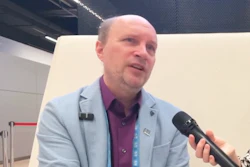

 Prof. Martin Hüllner, the vice director of nuclear medicine at University Hospital Zurich (USZ).USZ
The vice director of nuclear medicine at University Hospital Zurich (USZ) sees enormous potential in molecular imaging, but also knows how slowly promising innovations can reach patients.
In an interview during USZ's 25th-anniversary PET/CT symposium on 30 October, Hüllner shared which developments excite him most, what makes Zurich's approach to hybrid imaging distinctive, and what still holds the field back. And he revealed a more personal wish: that the next generation of doctors discover nuclear medicine much earlier in their education.
AuntMinnieEurope: Which recent advances in PET tracers or hybrid imaging have most significantly changed oncological staging and treatment planning, in your opinion?
Hüllner: The biggest development in the last decade was probably the introduction of prostate-specific membrane antigen (PSMA)-based PET tracers for patients with prostate cancer. They have changed staging, recurrence detection, and treatment response assessment.
Other tracers are on the horizon, particularly fibroblast activation protein inhibitor (FAPI) tracers. We are not yet using FAPI routinely in clinical practice in Switzerland, although we use it in research. In other countries, it has already entered clinical use.
FAPI is particularly interesting for diseases that are FDG-negative or show relatively low FDG uptake. So I would highlight PSMA and FAPI as two major developments.
AME: What technological developments are currently on your radar?
Hüllner: Whole-body dynamic imaging and parametric mapping are particularly interesting to me. We are following these developments closely in Zurich, especially with our new PET/CT system, which has an extended axial field of view. We are also continuing our PET/MRI research.
Personally, I am very interested in the use of fluorine-18 fluoroethyltyrosine (FET) PET for brain tumors, both primary tumors and secondary tumors, meaning metastases. One important application is distinguishing residual tumor after treatment from radiation-induced changes.
AME: Can you walk us through the patient pathway at University Hospital Zurich? How does it work in practice, particularly considering differences between healthcare systems and reimbursement?
Hüllner: Zurich is a tertiary care center. Most oncological patients are not referred directly to nuclear medicine but first see our clinical colleagues at University Hospital Zurich.
Usually, an abnormal finding has already been identified on CT or MRI, and sometimes a biopsy has been performed. Based on this information, the treating physicians decide whether PET imaging is indicated.
We are therefore not the first step in the diagnostic pathway. Patients generally come to us after discussions with the referring physicians or at multidisciplinary tumor boards.
For patients returning after treatment, the pathway can be more straightforward. If an initial PET examination provided useful information, a follow-up PET/CT or PET/MRI may be performed to assess the situation after treatment or a period of observation.
In Switzerland, we are fortunate to have a relatively broad range of reimbursed indications for PET/CT and PET/MRI compared with some other countries. In my opinion, that is very beneficial for clinical practice.
AME: Since you joined the nuclear medicine department, what technological changes have made the biggest difference? Has anything surprised you?
Hüllner: Every major technological development has influenced our clinical approach.
One significant change was the introduction of PET/MRI. It gave us another way to investigate diseases. For example, in patients with brain lesions, we often perform integrated PET/MRI rather than separate PET/CT and MRI examinations.
New detector technologies, scintillation crystals, and scanner geometries have also refined our understanding of disease.
Modern systems generate much larger datasets and provide more information. But importantly, more of that information is clinically relevant.
Older PET scanners also produced substantial amounts of data, but much of what we saw could be considered noise. With newer PET/CT and PET/MRI systems, we obtain more useful information while reducing that noise. This makes clinical image interpretation easier.
AME: Turning to reimbursement, radiopharmaceutical supply, and capacity, what are the main factors limiting patient access in Switzerland today?
Hüllner: One major limitation is that new tracers are not being transferred from research into clinical practice as quickly as we would like.
Some countries have been using FAPI clinically for years, while in Switzerland we are still largely restricted to research applications.
Regulatory requirements are very strict, and this can slow down the clinical introduction of new tracers. I would like to see that process accelerated so patients can benefit sooner.
Another important limitation is the shortage of staff, particularly nuclear medicine technologists.
The number of PET/CT scanners is not necessarily our biggest problem. We have some waiting times, but they are comparatively short. For FDG PET examinations, for example, patients generally do not face long delays.
The situation can be different with certain specialized tracers, such as gallium-68 DOTATATE. These tracers depend on generator-based production in Zürich, which limits the amount of radioactivity available. Sometimes we cannot fully meet clinical demand.
So I would identify three main bottlenecks: regulatory barriers to introducing new tracers, staffing shortages, and the increasing demand for certain specialized radiopharmaceuticals.
AME: Looking ahead, which innovations do you expect to change nuclear medicine further?
Hüllner: In nuclear medicine, innovation does not come only from new scanners. Much of it comes from new tracers.
There are interesting developments involving carbonic anhydrase tracers, chemokine-targeting tracers, and integrin-targeting tracers for different diseases.
In a sense, every new tracer opens up a new imaging possibility because it allows us to visualize a different biological process.
Another important development is whole-body dynamic imaging combined with parametric mapping.
This allows us to follow how a radioactive molecule behaves throughout the body, beginning with its injection. We can observe where it accumulates, where it is retained, and how it is excreted.
That offers information beyond a conventional static PET examination.
AME: If you could wish for one improvement in PET/CT or for your department, what would it be?
Hüllner: One of my main wishes would be a different regulatory approach to diagnostic radiotracers.
Currently, the authorities generally treat these tracers as medications. But diagnostic tracers are administered in extremely small amounts, typically at nanomolar or even picomolar concentrations, and are not intended to produce a pharmacological effect.
If they could be regulated differently from therapeutic medications, I believe this could accelerate the translation of promising tracers from research into clinical practice.
Ultimately, the aim would be to make these innovations available to patients more quickly.
AME: Is there anything else you would wish for nuclear medicine as a specialty?
Hüllner: I think nuclear medicine is still somewhat underrecognized among medical students.
Many students have very little contact with nuclear medicine during their studies. Partly, that is because the medical curriculum is already crowded, and larger specialties such as internal medicine and surgery take up considerable teaching time.
Students are therefore often introduced to nuclear medicine relatively late, sometimes initially through radiology.
Perhaps we nuclear medicine physicians could also do more to make the specialty visible.
I would like nuclear medicine to have a stronger presence in medical education so that students encounter the field earlier and become more familiar with what it can offer.
The interview took place during a symposium organized by University Hospital Zurich (USZ) in collaboration with GE HealthCare to mark 25 years of PET/CT at the hospital. For more on the anniversary, the technology's clinical impact, and future developments, read AuntMinnieEurope's full report from Zurich.