
A new fibroblast activation protein inhibitor (FAPI)-PET radiotracer demonstrates consistently high uptake across diverse solid malignancies, researchers in Germany have reported.
The findings support tracer’s potential role as a tool for multicancer diagnostic imaging and patient selection for FAP-targeted radioligand therapy, according to the group.
“Beyond diagnostic imaging, the observed uptake patterns have direct implications for FAP-targeted theranostics approaches,” noted Dr. David Ventura, of University Hospital Münster, and colleagues. The study was published on 19 March in the European Journal of Nuclear Medicine and Molecular Imaging.
PET using FAPI tracers has emerged as a robust imaging tool for detecting solid tumors. A variety of FAPI ligands (FAPI-04, FAPI-46, FAPI-74, and FAPI-2286, for instance) have been introduced and have shown superiority over standard F-18 FDG-PET, the researchers explained.
Early clinical results suggest that a new FAPI ligand called BED003 labeled with gallium-68 (Ga-68) is superior compared with other FAPI tracers, and in this study, the group aimed to extend initial results in a large cohort of patients.
The researchers analyzed data from 157 patients with 19 different kinds of malignancies who had undergone Ga-68 BED003 PET/CT or PET/MRI scans at their institution between March 2021 and October 2025. They measured maximum standardized uptake value (SUVmax) in primary tumors, lymph node metastases, and distant metastases.
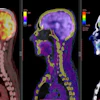
 Visual comparison of maximum intensity projection images from Ga-68 BED003 PET in 18 patients with different solid malignancies.European Journal of Nuclear Medicine and Molecular Imaging
Among tumor types with more than five lesions analyzed, medullary thyroid cancer and non-small cell lung cancer led with a median SUVmax of 19.7, followed by cervical cancer at 17.8 and esophageal cancer at 16.7, according to the findings.
“Ga-68 BED003 PET demonstrated consistently high uptake across diverse solid malignancies, supporting its potential role as a tool for multicancer diagnostic imaging,” the group wrote.
The researchers noted that the absence of a direct comparison with well-established F-18 FDG-PET in the same patients limits the interpretability of the study. However, the characterization of Ga-68 BED003's diagnostic performance is an immediate clinical priority, with a companion theranostic radioligand therapy called OncoFAP-23 currently being evaluated in a phase I clinical trial, they wrote.
"Ga-68 BED003 may not only serve as a sensitive imaging tool for detection of cancer-associated fibroblasts but also as a companion diagnostic to guide patient selection and treatment planning for OncoFAP-based radioligand therapy," the authors concluded.
The full study is available here.