Dear AuntMinnieEurope Member,
If you've had a particularly grueling week in the hospital or office and you feel in need of a lift, then I'd urge you to read the EuroMinnies feature on our award finalists.
This article was a joy for us to research, write, and produce. It highlights the achievements of researchers, educators, rising stars, radiographers, and industry from across the continent, and it shines a really positive light on European radiology. Honestly, you'll feel happier when you've read it.
In other news, the U.K. Royal College of Radiologists deserves praise for producing such a practical and timely document about running a CT colonography service and preparing for the future. Best of all, it's free for everyone to download and learn from. Find out more in the CT Community.
Another publication from the U.K. that caught our eye this week is about the impact of coronary CT angiography on coronary artery disease. Dr. Jonathan Weir-McCall, PhD, and his colleagues have conducted a thorough analysis of the data, and their findings deserve a close look.
How equitable and universal is access to, and uptake of, breast screening services? Authors have addressed this important question in an article in the European Journal of Radiology. Learn more in the Women's Imaging Community.
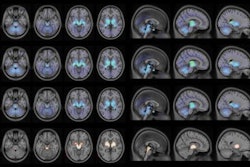
The application of MR spectroscopy continues to be a promising area of advancement in brain tumor management, with significant benefits in the context of different physiological imaging techniques, Irish researchers have reported. Get the full story in the MRI Community.







![Overview of the study design. (A) The fully automated deep learning framework was developed to estimate body composition (BC) (defined as subcutaneous adipose tissue [SAT] in liters; visceral adipose tissue [VAT] in liters; skeletal muscle [SM] in liters; SM fat fraction [SMFF] as a percentage; and intramuscular adipose tissue [IMAT] in deciliters) from MRI. The fully automated framework comprised one model (model 1) to quantify different BC measures (SAT, VAT, SM, SMFF, and IMAT) as three-dimensional (3D) measures from whole-body MRI scans. The second model (model 2) was trained to identify standardized anatomic landmarks along the craniocaudal body axis (z coordinate field), which allowed for subdividing the whole-body measures into different subregions typically examined on clinical routine MRI scans (chest, abdomen, and pelvis). (B) BC was quantified from whole-body MRI in over 66,000 individuals from two large population-based cohort studies, the UK Biobank (UKB) (36,317 individuals) and the German National Cohort (NAKO) (30,291 individuals). Bar graphs show age distribution by sex and cohort. BMI = body mass index. (C) After the performance assessment of the fully automated framework, the change in BC measures, distributions, and profiles across age decades were investigated. Age-, sex-, and height-adjusted body composition reference curves were calculated and made publicly available in a web-based z-score calculator (https://circ-ml.github.io).](https://img.auntminnieeurope.com/mindful/smg/workspaces/default/uploads/2026/05/body-comp.XgAjTfPj1W.jpg?auto=format%2Ccompress&fit=crop&h=112&q=70&w=112)


