Imaging services provider Radiology Partners (RP) said that its RP One fund has donated a total of $66,000 U.S. (55,683 euros) to two nongovernmental organizations (NGOs) in India as part of its Aid to India initiative.
The fund distributed $33,000 (27,841 euros) each to a group called Asha and to the Wadhwani Initiative for Sustainable Healthcare (WISH). Asha supports empowerment, healthcare, education, financial inclusion, and environmental improvement in order to tackle issues that keep many in poverty, while WISH is a nonprofit organization in India that aims to create an equitable healthcare system and enable access to quality primary care for underserved populations, according to RP.
Initially established to provide grants to RP radiologists and support staff experiencing emergent financial hardship during the COVID-19 pandemic, the RP One fund can now also be used for individual hardships, emergencies, and disasters, the company said. A committee of RP radiologists and support staff review applications and disburse grants. Approximately $450,000 (379,654 euros) in grants have been issued to date, RP said.



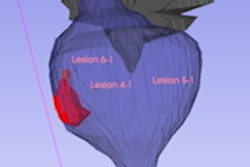





![Overview of the study design. (A) The fully automated deep learning framework was developed to estimate body composition (BC) (defined as subcutaneous adipose tissue [SAT] in liters; visceral adipose tissue [VAT] in liters; skeletal muscle [SM] in liters; SM fat fraction [SMFF] as a percentage; and intramuscular adipose tissue [IMAT] in deciliters) from MRI. The fully automated framework comprised one model (model 1) to quantify different BC measures (SAT, VAT, SM, SMFF, and IMAT) as three-dimensional (3D) measures from whole-body MRI scans. The second model (model 2) was trained to identify standardized anatomic landmarks along the craniocaudal body axis (z coordinate field), which allowed for subdividing the whole-body measures into different subregions typically examined on clinical routine MRI scans (chest, abdomen, and pelvis). (B) BC was quantified from whole-body MRI in over 66,000 individuals from two large population-based cohort studies, the UK Biobank (UKB) (36,317 individuals) and the German National Cohort (NAKO) (30,291 individuals). Bar graphs show age distribution by sex and cohort. BMI = body mass index. (C) After the performance assessment of the fully automated framework, the change in BC measures, distributions, and profiles across age decades were investigated. Age-, sex-, and height-adjusted body composition reference curves were calculated and made publicly available in a web-based z-score calculator (https://circ-ml.github.io).](https://img.auntminnieeurope.com/mindful/smg/workspaces/default/uploads/2026/05/body-comp.XgAjTfPj1W.jpg?auto=format%2Ccompress&fit=crop&h=112&q=70&w=112)


