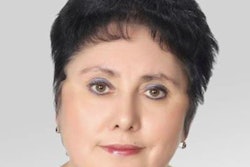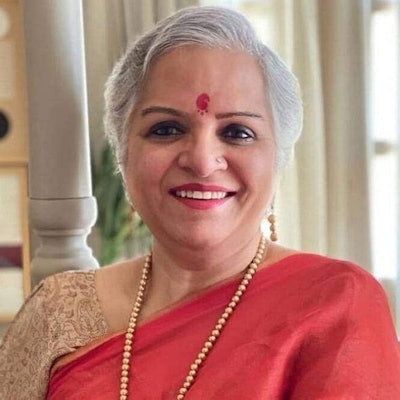
Radiologist and social media personality Dr. Padmavati Dua, also known as Chinna Dua, died at a private hospital in Gurugram, India, on 11 June due to COVID-19 complications, the local and national media have reported. She was 61 years of age.
She is survived by her husband, journalist Vinod Dua, who had also contracted COVID-19, and her daughters, actor and comedian Mallika Dua and clinical psychologist Dr. Bakul Dua, according to a report in SheThePeople.TV, an Indian digital news website that focuses on women.
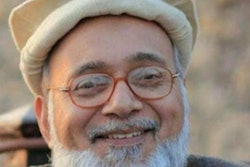
 Dr. Padmavati Dua was called "Chinna," which in Tamil means "small." Image courtesy of Indo-Asian News Service.
Besides being a radiologist by profession, Chinna Dua was also a social media influencer, describing herself as a "medical doctor, singer, passionate cook, saree wearer, vlogger, mom, and human," on her Instagram account. Her social media account is a testament to her love for traditional Indian sarees, SheThePeople noted.
She and her husband were both admitted to hospital on 14 May. On 22 May, Chinna Dua updated her followers about her health. "Good day. Hope you all are fine. At this stage we would all love miracles... Shraddha and saburi i.e. faith and patience is the only way to tide over. So stability and status quo are to be thankful for which is how it is right now. There are samples taken in the middle of the night. Sleep is disturbed for medicines, sponging, meals and what nots leaving one exhausted at times... Please continue with your prayers."
She was put on a ventilator on 26 May, the article continued.
Who was Chinna Dua?
She was of Tamil ethnicity but raised in New Delhi. She was affectionately called by the name "Chinna," which in Tamil means "small." This is because she was the youngest in her family.
Dua was raised in a family in which studies were a priority. She used to say that her parents were feminists and that they were well ahead of their time.
She initially wanted to become a gynecologist and began a traineeship for six months. Later, she took a career break for seven years until her children were old enough to go to school, and that's when she decided to switch to radiology.
She worked at the Diwan Chand Aggarwal Imaging Center in Delhi for 24 years until it shut down in 2016. In August 2019, she took a break from radiology and started to embrace social media. She taught herself how to take selfies, edit videos, etc. "I feel very proud of myself. It keeps me going. It's important to keep re-inventing yourself," Dua told SheThePeople in 2020.
Dua was full of life and advocated the same to all on social media, the report continued. "In my mind, I'm always young. I'm 60, but in my mind, I'm 16. I still have to remind myself of my age sometimes. It's an attitude yaar."
On 12 June, Chinna Dua's daughter Mallika took to social media to mourn her mother. "She left us last night. My whole heart. My whole life. The only god I know. My Amma I'm sorry I couldn't save you. You fought so hard my mama. My precious. My heart. You're my whole life," she wrote in an Instagram story.
In a separate story Mallika added, "It's not about my loss and grief. It's about a life cut short. I always knew I didn't deserve her. But she deserved to live. I don't know if I will ever be able to pray again."