The European Society of Radiology (ESR) has published a tribute to Prof. Natalia Rotaru, PhD, the breast radiologist from Moldova who died at the age of 57. She was a prominent educator and author in her own country, but contracted COVID-19 while performing her clinical duties.
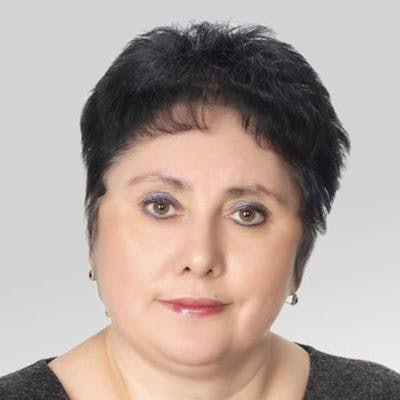
 Prof. Natalia Rotaru.
Rotaru was chair of radiology at the "Nicolae Testemiţanu" State University of Medicine and Pharmacy in Chisinau at the time of her death. She worked for almost a decade at the Institute of Oncology in Chisinau, where she acted as a radiology attending physician. Alongside this role, she worked at the Free International University of Moldova (ULIM) from 1992 to 2001, and she advanced from her initial position as assistant professor in radiology and medical imaging to the dean of postgraduate medical residency training.
In 1996, she obtained her PhD in medical imaging at the State University of Medicine & Pharmacy in Cluj-Napoca, Romania. The ESR said that breast imaging and breast cancer were Rotaru's special interests. She held a number of subspecialty certifications not only in mammography but also CT, MRI, ultrasound, and interventional radiology. She authored more than 100 publications during her career.
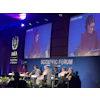
 Prof. Natalia Rotaru at a medical congress in Moldova in 2018. Right: Prof. Lorenzo Derchi from Genoa, Italy, past president of the European Society of Radiology. Left: Dr. Max Krivchansky, president of the Moldovian Society of Radiology. Image courtesy of the ESR.
In 2008, Rotaru became a radiology professor at the "Nicolae Testemitanu" State University of Medicine and Pharmacy in Chisinau and held other positions such as chair of the certification board of radiology and radiation therapy in the Ministry of Health, Labor, and Social Protection of Moldova as well as chair of the Radiology and Medical Imaging Legislation Committee in that same ministry.
Rotaru contracted COVID-19 while performing her clinical duties and passed away in the autumn. The full obituary is available on the ESR website.