In healthcare and radiology circles these days, much is written and said about services being based on clinical need and the importance of providing a comprehensive service. This begs the questions: What do we mean by need? What is included in a comprehensive service and why?
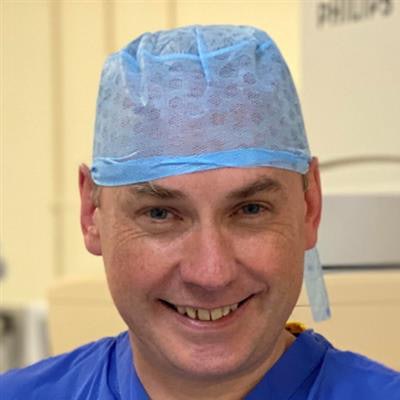
 Dr. Chris Hammond from Leeds, U.K.
In the U.K., the National Health Service (NHS) Constitution states that access to its services should be based on clinical need and not on an individual's ability to pay and that the NHS should provide a comprehensive service, available to all. For many people in the U.K., these are articles of faith -- fundamental organizing principles that underpin one of the great achievements of postwar British society. They seem, on the face of it, to be unassailable. Who could argue?
My dictionary defines need as being in want of something, or to require something "of necessity." In discussing need in the context of organizing the NHS, we should describe what this "something" is. Do we mean health or healthcare (or something else)?
Health versus healthcare
In 1948, the World Health Organization (WHO) defined health as not only the absence of disease or infirmity but also a state of complete physical, mental, and social well-being. This definition has been subject to criticism for the somewhat vague language ("well-being") and because it excludes people who consider themselves healthy who nevertheless have "disease or infirmity" (e.g., those with disability). More recent definitions of health describe it more in terms of a resource -- one of a number of physiological needs to facilitate a flourishing life.
 Dynamic hierarchy of needs of Abraham Maslow referring to Krech, D./Crutchfield, R. S./Ballachey, E. L. (1962), Individual in society, Tokyo etc. 1962, S. 77. Image courtesy of Philipp Guttmann. Licensed under CC BY 4.0.