A new working group has been established between international institutions to use MRI to investigate some of the most puzzling questions about traumatic brain injury. The group includes 170 researchers from 13 countries.
The Enhancing Neuro Imaging Genetics through Meta-Analysis (ENIGMA) working group seeks to provide researchers worldwide with an effective framework and platform for large-scale cross-border collaboration and data sharing of studies on adult moderate/severe traumatic brain injury.
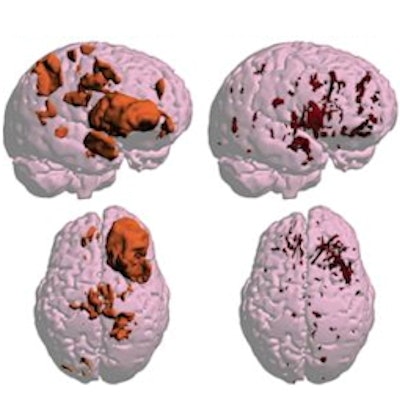
 Illustration shows complexity of the data obtained from a single patient with moderate/severe traumatic brain injury. Different imaging approaches and techniques have their own unique sensitivity in assessing different aspects of neuroanatomy and neuropathology. What can be seen on images also changes with time since injury. Image courtesy of Olsen et al, Brain Imaging and Behavior, 2020.
The global burden of mortality and morbidity caused by traumatic brain injury is significant. However, the heterogeneity of these patients and the relatively small sample sizes of most neuroimaging studies present a challenge for scientific advances and clinical translation, according to the group.
ENIGMA plans to change all that. It will facilitate the development and dissemination of multiscale and big data analysis pipelines for traumatic brain injury patients. It plans to use structural and functional neuroimaging in combination with nonimaging biomarkers, genetics, and clinical as well as behavioral measures.
"Ultimately, we will offer investigators an unprecedented opportunity to test important hypotheses about recovery and morbidity in adult moderate/severe traumatic brain injury by taking advantage of our robust methods for large-scale neuroimaging data analysis," the group said in a study abstract outlining its goals (Brain Imaging and Behavior, 14 August 2020).
ENIGMA plans to tackle unanswered questions such as how sex impacts outcome, whether there are subtypes within the broader patient population, and how to handle lesions in neuroimaging data. All of these questions have been hindered by the size of individual samples, said Emily Dennis, PhD, who is co-principal investigator for ENIGMA's main group on brain injuries.
ENIGMA researchers will apply different types of advanced analysis methods to MRI data already collected from the U.S., Europe, Australia, the Middle East, South Africa, and South America.
"We're working to develop better and more standardized ways of summarizing and making sense of the MRI data, and we hope to contribute to breakthroughs in research that will benefit patients," said Alexander Olsen, PhD, an associate professor at the Norwegian University of Science and Technology's (NTNU) department of psychology and a neuropsychologist at St. Olavs Hospital in Norway. He is a co-leader of an ENIGMA subgroup focused on moderate to severe brain injuries.