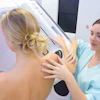
Dr. Carlo Amodio -- a highly respected senior radiologist from near Bologna -- has died of COVID-19. He joins the fast-growing list of 87 medical doctors in Italy who have died from the disease, the National Federation of Doctors' Guilds (FNOMCeO, Federazione Nazionale degli Ordini dei Medici Chirurghi e degli Odontoiatri) announced on 6 April.
Cardiologist Dr. Giuseppe Aldo Spinazzola, neurologist Dr. Riccardo Zucco, internal medicine specialist Dr. Silvio Lussana, and intensive care specialist Dr. Vincenzo Emmi have also died recently, according to a report on the ANSA.it website. In addition, general practitioners Dr. Giovanni Battista Tommasini and Dr. Gianbattista Bertolasi, plus "thermal doctor" Dr. Ghvont Mrad, have been added to the list of deceased doctors.
 Dr. Carlo Amodio -- a radiologist from Maria Cecilia Hospital in Cotignola -- has died of COVID-19.
Amodio, 71, was a consultant radiologist for several clinics in the center of Italy, including Maria Cecilia Hospital in Cotignola and Diagnostica Blandini in Pesaro. He was the former chief of radiology in Santa Croce Hospital in Fano, near Pesaro.
He was taken into hospital on 11 March. He died in the resuscitation unit of San Salvatore Hospital in Pesaro, having fought the virus to the end and remaining at his workplace for as long as he could, staying in front of his equipment and always ready to lend a hand, noted an article on ilmessaggero.it.
"Carlo Amodio will be remembered as a physician of great value -- moral and professional -- a good man who never missed an opportunity to help others: generous, always cheerful, and a perfectionist," the article stated.
A Facebook posting about Amodio's death was made on 6 April by Noi Poliziotti per sempre. By the afternoon of 7 April, the page had received more than 1,700 likes, 294 comments, and 591 shares.
He obtained a degree in medicine and surgery at the University of Bologna and was well known throughout Italy, especially in the Marche region, the land where he lived with his family for the past 40 years.
Maria Cecilia Hospital was founded in the early 1970s as the first hospital of the GVM Care & Research group. Cotignola is located in the province of Ravenna in the Italian region Emilia-Romagna, and the town is about 50 km southeast of Bologna.