
GRANADA, SPAIN - The growing miniaturization of devices, the emergence of elastography, and the more efficient use of contrast agents are the three top technology trends in ultrasound today, according to Dr. Paul Sidhu from London. He's also sure modality-specific congresses still have a bright future.
Sidhu is a professor of imaging sciences at King's College London and a consultant radiologist at King's College Hospital. He is also the immediate past president of the European Federation of Societies for Ultrasound in Medicine and Biology (EFSUMB), having handed over the presidency at EuroSon 2019.
In this video interview, he explains about which areas are exciting him most in the clinical arena and how ultrasound is organized at King's. He also speaks about the current revisions to the worldwide guidelines for focal liver lesions.
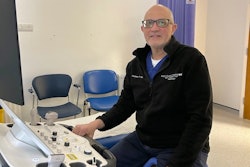
Dr. Paul Sidhu from London.






![Overview of the study design. (A) The fully automated deep learning framework was developed to estimate body composition (BC) (defined as subcutaneous adipose tissue [SAT] in liters; visceral adipose tissue [VAT] in liters; skeletal muscle [SM] in liters; SM fat fraction [SMFF] as a percentage; and intramuscular adipose tissue [IMAT] in deciliters) from MRI. The fully automated framework comprised one model (model 1) to quantify different BC measures (SAT, VAT, SM, SMFF, and IMAT) as three-dimensional (3D) measures from whole-body MRI scans. The second model (model 2) was trained to identify standardized anatomic landmarks along the craniocaudal body axis (z coordinate field), which allowed for subdividing the whole-body measures into different subregions typically examined on clinical routine MRI scans (chest, abdomen, and pelvis). (B) BC was quantified from whole-body MRI in over 66,000 individuals from two large population-based cohort studies, the UK Biobank (UKB) (36,317 individuals) and the German National Cohort (NAKO) (30,291 individuals). Bar graphs show age distribution by sex and cohort. BMI = body mass index. (C) After the performance assessment of the fully automated framework, the change in BC measures, distributions, and profiles across age decades were investigated. Age-, sex-, and height-adjusted body composition reference curves were calculated and made publicly available in a web-based z-score calculator (https://circ-ml.github.io).](https://img.auntminnieeurope.com/mindful/smg/workspaces/default/uploads/2026/05/body-comp.XgAjTfPj1W.jpg?auto=format%2Ccompress&fit=crop&h=112&q=70&w=112)


